
拆解谷歌:AI Overviews 反向加速 Search、$462B Cloud 积压与 $40B Anthropic 闭环——故事正在切换
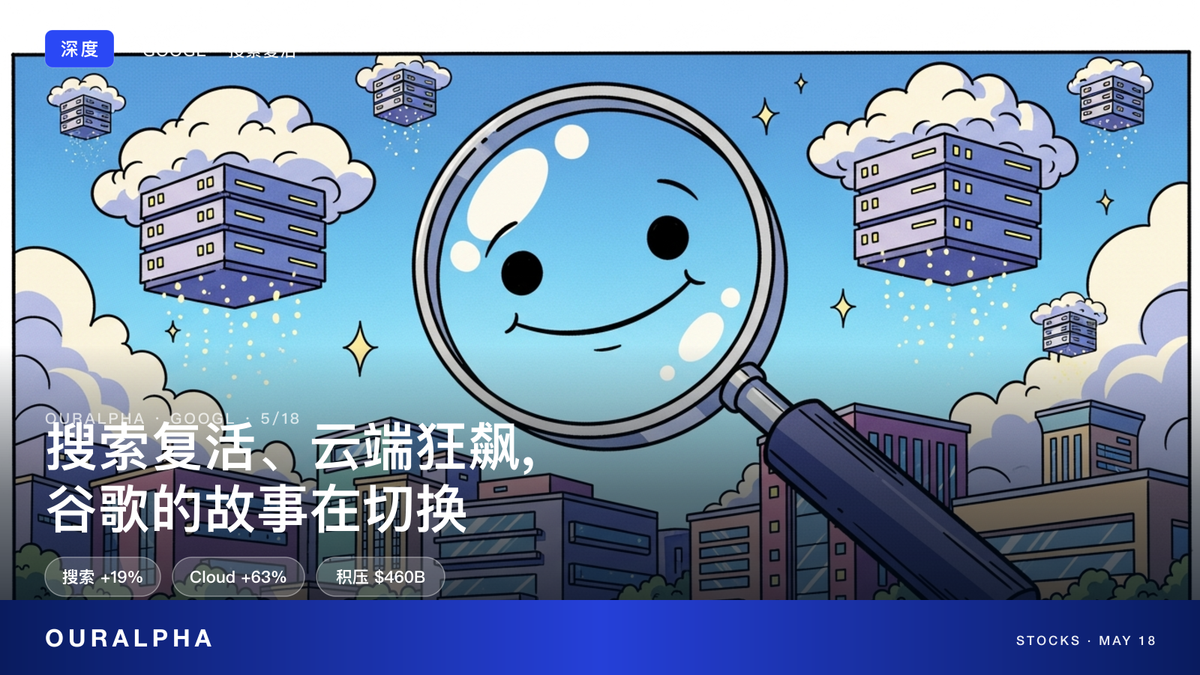
Alphabet Q1 2026 财报拆解:Search +19%、Google Cloud +63% 至 $20.0B、Cloud backlog 超 $460B(环比接近翻倍)、Anthropic up to $40B + 5GW TPU 闭环;AI Overviews / AI Mode 两曲线的商业化阶段、反垄断三线作战(Mehta 拒 Chrome 剥离但 DOJ 已上诉)、Waymo 500K rides/week。附 5 维评分、Forward P/E ~28x 解释力与下季 5 指标。

TL;DR · 一句话叙事
谷歌($GOOGL)2026 年 5 月的故事,已经从"AI 会吃掉 Search 广告"切换成"AI 反过来给 Search 续命,Cloud 跑出逃逸速度"。Q1 2026 财报(2026/4/29 公布)几乎打爆了所有 AI bear 的核心论据——Search +19%、Google Cloud +63% 至 $20.0B、Cloud backlog 超 $460B(环比接近翻倍)——但代价是 FY26 capex 上修到 $180–190B、TTM FCF 同比 -14%。同时需要小心:AI Overviews / AI Mode 的 CTR、ARPU、ad load 与单独变现率仍未披露——AI 没有立刻杀死 Search,但还没有证明 AI Search 的长期单位经济模型一定优于传统 Search。
- Q1 2026 营收 $109.9B(+22% YoY / CC +19%),运营利润率 36.1%(公司历史最高)[Alphabet Q1 2026 Press Release / SEC]
- Search & other advertising $60.4B(+19% YoY),延续过去数季的加速趋势(Alphabet 各季 earnings release 显示 Q1'25 → Q1'26 增速逐季抬升至 +19%)[Alphabet Q1 2026 8-K · SEC]
- Google Cloud +63% 至 $20.0B(GCP 为主要驱动,含 Workspace + 其他企业服务);管理层口径"如果产能充足,云营收会更高"——supply 是 binding constraint,不是 demand[TechCrunch]
- Cloud backlog 超 $460B(环比接近翻倍)——按公司披露 Q4'25 backlog 约 $240B 估算,单季新增约 $220B+;公司预期约 50% 在未来 24 个月内确认为收入[Tikr / Q1 电话会]
- AI Overviews 早在 2025 年中已达到 2B 月活(200+ 国家),由 Gemini 驱动;AI Mode 在美国 + 印度达 100M 级别(2025 年报道)——但这两个指标的 click-through、ARPU、单独变现率谷歌至今未单独披露,Q1 2026 财报的"新增证据"不是用户数本身,而是 Search +19% 仍在加速[Innovation Village][DigitalApplied / AI Mode 统计]
- Google 投资 Anthropic up to $40B($10B 即时 + $30B milestone-based)、Anthropic 估值约 $350B(Reuters 口径);同时 commit 5 GW TPU 算力 over 5 years,reportedly including up to 1M Ironwood 芯片——"投资 + 算力 + 模型客户"闭环,但也引出 circular financing 质疑[CNBC][Anthropic 官方]
- Capex Q1 $35.7B,FY26 guidance 上修至 $180–190B(自 $175–185B),管理层口径 2027 capex 将"significantly increase";TTM FCF $64.4B(同比 -14%,因 capex TTM +90%)[heygotrade · Q1 2026 reaction]
- 反垄断 overhang 仍在:2025/9/2 Judge Mehta 判决禁独家分发协议 + 强制共享 search index,但拒绝剥离 Chrome / Android;Google 已于 2026/1/16 上诉,DOJ + 35 个州也在 2/3 提反诉求 Chrome divestiture——上诉法庭辩论预计 late 2026 / early 2027[Search Engine Land][CRS Report]
- 市场定价:2026/5/15 附近股价约 $397–402、市值约 $4.8–4.9T、Forward P/E ~28x(Trefis 口径,vs 5 年历史均值 21x ≈ 35% 溢价;不同数据源因 EPS 年份和股价时点存在差异);卖方共识区间 35 位分析师 $408 / 52 位分析师 $427,高 $515(Citizens)、低 $310(DA Davidson)[Stock Analysis][Trefis · Re-rating GOOGL]
过去两年市场对 GOOGL 的看空逻辑只有一条:AI 会吃掉 Search 广告。Q1 2026 财报给出的反向证据是——AI Overviews 不仅没杀死 Search,Search 增速反而从过去两年的个位数加速回到 +19%;同时 Cloud backlog 环比接近翻倍至超 $460B,并就 5GW TPU 算力 over 5 years 与 Anthropic 达成长期承诺(reportedly including up to 1M Ironwood 芯片)。Search 没被立刻吞噬、Cloud 跑赢 AWS / Azure、自研 TPU 进入 Anthropic + 自家 Gemini 双轨——这是 Mag 7 里第一个把"全栈 AI"叙事跑实的公司。
但这条护城河值得 28x forward P/E 吗?答案不在 Q2,在三件事是否兑现:(1) AI Search 的长期单位经济模型是否真的优于传统 Search,Google 至今未单独披露 AI Overviews / AI Mode 的 monetization;(2) FY26 capex 落到 $180–190B 之后 FCF 跌幅是否稳住;(3) 反垄断上诉的 outcome 是否真的会动 Chrome / 默认搜索协议。任意一条变差,35% 估值溢价会被回收一部分。同时市场也开始警惕 circular financing——Big Tech 对 AI startup 的投资、云合同、估值收益之间的相互强化,需要持续区分真实外部需求与生态内循环需求。
OurAlpha 评分
| 维度 | 评分 | 说明 |
|---|---|---|
| 基本面强度 | 9/10 | Search +19% 五季连加速、Cloud +63% 破纪录、运营利润率 36.1% 历史最高,是 Mag 7 当季最强基本面之一 |
| 披露透明度 | 6.5/10 | AI Overviews / AI Mode 的 CTR、变现率、AI vs 传统 Search ads 的拆分均未单独披露 |
| 资本效率可见度 | 6/10 | FY26 capex $180–190B 已是 GOOGL 历史最高,TTM FCF -14% 是直接代价,ROIC 路径要看下个 4 季 |
| 估值吸引力 | 6/10 | Forward P/E 28x vs 5Y 均值 21x(35% 溢价),不算便宜;buy 还是基于"Cloud + Waymo 重定价" |
| 叙事稳定性 | 7/10 | Search × AI Overviews 反向加速的叙事在过去 5 季已经连续验证;反垄断 + capex 是叙事尾部风险 |
综合 6.9/10——基本面与"全栈 AI"叙事强,但估值已不在 deep value 区间,看的是叙事兑现节奏而非"安全边际"。
一、Q1 2026 财报:22% 增长 + 历史最高利润率,AI bear 论据被逐条打掉
谷歌 Q1 2026(季度截至 2026/3/31)数据[Alphabet Q1 2026 8-K · SEC]:
| 项目 | Q1 2026 | YoY | 关注点 |
|---|---|---|---|
| 总营收 | $109.9B | +22%(CC +19%) | beat 共识 $108B 量级 |
| 运营利润 | $39.7B | — | — |
| 运营利润率 | 36.1% | — | 公开可比口径下的历史高位 |
| Google Services | $89.6B | +16% | Search + YouTube 双引擎 |
| ⤷ Search & other advertising | $60.4B | +19% | 延续过去数季加速趋势 |
| ⤷ YouTube advertising | $9.88B | +11% | 稳定基本盘 |
| Google Cloud | $20.0B | +63% | GCP 为主要驱动 |
| Capex(单季) | $35.7B | TTM 接近 $110B | FY26 全年指引 $180–190B |
| FCF TTM(截至 3/31) | $64.4B | -14% | capex TTM 增速远超 OCF 拖累 |
两个故事的撕裂:
- 盈利侧——36.1% 的运营利润率是公开可比口径下的历史高位。AI 推理成本走低(据媒体转述管理层口径,Gemini 3 升级后 AI serving cost 进一步压低,但 Google 未在财报表格中单独披露 specific 降幅[Search Engine Journal])+ Search ads 加速 + 利润率高的 YouTube ads 增长共同推上去。
- 现金流侧——TTM FCF $64.4B 同比 -14%,主要不是 OCF 出问题(OCF 仍在双位数增长区间),而是 capex TTM 增速远超 OCF。Capex 与 OCF 之间的剪刀差短期不会收敛。
市场反应:GOOGL 财报后股价上行(vs MSFT 同季 $190B capex 公布后股价 -4~5% 下跌的对照)[heygotrade]。同样是 capex 上修,市场为什么愿意给 GOOGL 买单、不愿意给 MSFT 买单? 答案是 GOOGL 用 Cloud +63% 给资本支出配上了一个 ROIC 故事,MSFT 当时只有 Azure +40%(已是连续加速)但缺少"破纪录加速"的视觉冲击。
二、Search 五季加速到 +19%:AI 自我吞噬反而让 Search 重新跑起来
这是这份财报里最反共识的部分。
| 季度 | Search & other ads YoY |
|---|---|
| Q1 2025 | +10% |
| Q2 2025 | +12% |
| Q3 2025 | +15% |
| Q4 2025 | +17% |
| Q1 2026 | +19% |
历史增速序列基于 Alphabet 每季 earnings release 披露的 Google Services - Search & other 数字交叉计算[Alphabet IR · 历史 Earnings Release]。
五季加速、加速幅度逐季扩大。Pichai 在电话会上把这条曲线归因于 AI experiences(AI Overviews + AI Mode)推动 usage 与 query 增长[Sundar Pichai · Q1 2026 Earnings Remarks]。同时管理层口径:Q1 Search queries 创历史新高。
但这里需要小心两个层次:
- 公司口径——Pichai 把加速归功于 AI 体验。这是 Q1 2026 电话会的官方叙事框架。
- 第三方数据——SEO 行业第三方研究显示[QuickSEO 2026 数据]:AI Overviews 出现在大约 20% 的搜索结果中(部分国家高至 37.2%);当 AI Overviews 出现时,顶部 organic 链接的 CTR 下降约 34.5%–64.4%;AI Mode 会话中 93% 的 query 没有 outbound click。
这两层数据并不矛盾——它们说明的是同一件事的两面:
- 第三方 SEO 数据反映的是 publisher / organic traffic 层面的压力——CTR 下降是真实的,但不能直接等同于 Google Search advertising revenue 的变现压力;
- 即使 AI Overviews 压缩部分 outbound clicks,query 总量增长 + 广告产品调整 + 商业查询保留共同抵消了压力(query 创历史新高是 Pichai 在电话会的口径);
- 因此一个分析框架——Search ads 营收 ≈ 单 query 货币化 × query 总量——可以用于推演,但 Google 至今未披露单位 query monetization 或 AI Overviews / AI Mode 对 Search revenue 的独立贡献,"单价微跌 × 数量大涨"只是分析框架,不是事实结论。
这是为什么市场愿意把 GOOGL 重新定价。但这个均衡能不能持续,取决于 AI 内嵌答案在多少品类里能继续保留付费 ads 的位置。Google 已在测试 AI Overviews / AI Mode 内的广告位[Search Engine Journal]——这是公司主动用商业化弥补 CTR 流失的尝试,目前看效果好,但只跑了 5 个季度,还没经历一个完整的广告周期。
三、AI Overviews + AI Mode 双引擎:两个不同的故事
这两个产品经常被合在一起说,但它们是两条独立曲线:
| 产品 | 用户规模 | 形态 | 增长曲线 |
|---|---|---|---|
| AI Overviews | 2B 月活,200+ 国家(早在 2025 年中已达到)[Innovation Village] | 嵌入 Search 结果页顶部的摘要卡片 | 2025/5 推出 → 2025 年中 2B 月活级别,说明 Google 已完成对 Search 主入口的大规模 AI 改造 |
| AI Mode | 100M 级别(US + 印度),1B+ 月查询(2025 年报道)[Quantumrun] | 独立的对话式搜索界面("Ask Google") | 2025/5 推出 → 2025/12 75M → 2026 早期 100M+;Google 正在把 AI Mode 更深整合进 Search 和移动端入口 |
注:上述用户数主要为 2025 年报道口径,Q1 2026 财报未对 AI Overviews / AI Mode 做单独披露——这本身就是信息缺口的一部分。
两个产品的商业化阶段差很大:
- AI Overviews 已经在跑 ads 测试——美国移动端有 ads 出现,但 Google 未单独披露其对 Search revenue 的独立贡献。它更适合理解为 usage / query growth 的解释变量,而非"主要变现引擎"。
- AI Mode 还在测试——据第三方观察,约 25% 的 AI Mode 结果中已经出现 ads[DigitalApplied],但 Google 没有公开披露 AI Mode 的单独货币化率或 CTR。
这是 GOOGL 信息披露最大的一块缺口——公司给了 query 总量创历史新高、Search 营收 +19% 这两个口径,但没有给 AI Overviews vs 传统 Search、AI Mode vs Overviews 的拆分变现率。这意味着:
- 看多方可以说"AI 是引擎"——是真的;
- 看空方可以说"AI 摊薄了变现密度"——也可能是真的;
- 双方都没法用公司披露数据自证。等到 AI Mode 用户基数足够大、Google 必须给出独立披露的那天,才是真正的考验。
四、Google Cloud +63% 与 backlog 超 $460B:bottleneck 不在 demand,在 supply
| 季度 | Google Cloud YoY | Google Cloud 营收(约) |
|---|---|---|
| Q2 2024 | +29% | $10.3B |
| Q4 2024 | +30% | $11.9B |
| Q1 2025 | +28% | $12.3B |
| Q3 2025 | +34% | $14.9B |
| Q4 2025 | +48% | $17B+ |
| Q1 2026 | +63% | $20.0B |
数据来源:Alphabet 历史 earnings release / Statista 整理[Alphabet IR]。注:Google Cloud 营收口径包含 GCP + Workspace + 其他企业服务;Q1 2026 的 +63% 加速由 GCP 中 enterprise AI 解决方案 + 基础设施驱动。
Backlog 超 $460B 的真实含义:
Alphabet 官方 Q1 release 表述为 "Google Cloud backlog nearly doubling quarter on quarter to over $460 billion"[TechCrunch]。若按 Q4 2025 backlog 约 $240B 估算,单季新增约 $220B+。这是云行业有史以来最大的单季 backlog 跳升之一。但要注意几个口径[Tikr]:
- 大部分是 typical GCP 合同;
- 包含 TPU 硬件销售合同——这是一个 vs AWS / Azure 的口径差异,跨公司比较 backlog 时需要单独列出;
- 公司预期 backlog 的略超 50% 将在未来 24 个月确认为收入。
为什么这次是 supply 限制而不是 demand?
Pichai 在电话会上明确表态:"如果产能充足,我们的云收入会更高"[TechCrunch]。这是过去 4 年 Google Cloud 第一次官方承认产能是天花板而不是需求是天花板。
这件事本身就是估值重定价的核心——所有云的旧框架是"Google Cloud 永远是第三、跟跑者"。Q1 数据打掉这一条:Google Cloud +63% vs Azure +40% vs AWS +28%(AWS 数据待二轮核)[Mirror Review],Google Cloud 已经是三家中跑得最快的,且差距在拉大。
五、Anthropic $40B 闭环:投资 + 5GW 算力 + 1M+ Ironwood = 全栈 AI 第一次跑通
2026/4/24(Q1 财报前 5 天),Google 与 Anthropic 共同宣布了 Mag 7 历史上最深的产业绑定[CNBC]:
| 组件 | 金额 / 规模 | 备注 |
|---|---|---|
| 股权投资 | up to $40B | $10B 即时 + $30B contingent on milestones |
| Anthropic valuation | ~$350B(Reuters 口径) | 本轮 $10B 即时投资估值 |
| Google Cloud 提供算力 | 5 GW,over 5 years | reportedly including up to 1M Ironwood TPU chips[Anthropic 官方](非已交付) |
| Google 与 Anthropic 关系 | 已有 | Google 此前已是 Anthropic 的重要投资者之一 |
Ironwood 芯片是什么:Google 第七代 TPU,2025/11 GA,单芯片 4.6 PetaFLOPS FP8 / 192GB HBM3e / 7.4 TB/s 带宽[ServeTheHome]。Gemini 3 / Gemini 3.1 Pro 已经在 Ironwood 上跑生产推理。
为什么这个闭环重要:
- 谷歌等于一手给 Anthropic 投钱,一手用 GCP 卖给 Anthropic 算力,一手用 Ironwood 卖给 Anthropic 芯片——投资回报 + 营收 + 芯片自研需求验证三重收益。
- 这是 Mag 7 第一个把"全栈 AI"跑实的样本:模型(Gemini)、芯片(TPU)、云(GCP)、模型客户(Anthropic + 自家 Gemini)四层全部自循环。
- 对照 MSFT 的 OpenAI 重构(27% economic interest、独家变非独家),Google 的 Anthropic 关系反而更深、更稳——Anthropic 在算力 lock-in 上比 OpenAI 在 Azure 上的捆绑更强(5 GW + 1M 芯片是物理硬绑定,OpenAI 现在已经 multi-cloud)。
反面约束(必须配对正面论断):
- $40B 的 $30B 部分是 milestone-based——不是已经发生的现金支出,需要 Anthropic 达成业绩目标才会触发。
- Google 与 Anthropic 之外,Anthropic 已和 Amazon AWS 签了 Trainium 大单。这意味着算力 lock-in 不是排他的——Anthropic 是 multi-cloud + 多芯片堆栈的。
- Anthropic 在 Claude 企业版上对 Gemini Enterprise 形成商业竞争[The Next Web]——Google 既是 Anthropic 的投资者 + 供应商,也是 Anthropic 的竞争对手。
- Circular financing 质疑:Big Tech 与 AI startup 之间"投资 → 云合同 → 估值收益 → 长期算力承诺"形成相互强化(Google → Anthropic → GCP / TPU;类似 MSFT → OpenAI → Azure;AMZN → Anthropic → AWS Trainium)。市场未来可能要求更清晰区分真实外部需求与生态内循环需求,否则 backlog 与 capex 的质量都会被打折。
这是 GOOGL 当前所有 Mag 7 里产业链厚度最深的样本,但不应该被读成"Anthropic = 谷歌的下属业务",也不应该把 ecosystem-internal demand 简单等同于 external market demand。
六、反垄断三线作战:Mehta 判决 + 双方上诉 + 广告案二审
Search 反垄断主线时间轴[CRS Legal Sidebar · LSB11362]:
| 时间 | 事件 | 含义 |
|---|---|---|
| 2024/8 | Judge Mehta 判定 Google 在搜索市场具有垄断地位 | "guilt phase" 定罪 |
| 2025/9/2 | Mehta 公布 remedy 判决 | 限制独家分发安排 + 要求与合格竞争者共享部分 search index 和 user-interaction data;但拒绝剥离 Chrome 和 Android |
| 2026/1/16 | Google 上诉 | 挑战数据共享要求和技术委员会监督 |
| 2026/2/3 | DOJ 与多州对 remedies ruling 提起上诉 | 挑战法院未采纳 Chrome divestiture、Android divestiture、彻底禁止默认搜索付款等更强 remedy[Search Engine Land] |
| 市场预期 | 上诉法庭辩论 | oral arguments 可能落在 late 2026 / early 2027(legal timeline 仍不确定,最终 outcome 大概率落在 2027 之后) |
为什么市场没有崩:
- 2025/9 Judge Mehta 判决"behavioral remedy(行为补救)而非 structural remedy(结构性剥离)"——这是当时 GOOGL 单日上涨约 8% 的核心原因[NPR]。
- 数据共享条款比预期窄——市场原本担心 Google 必须共享 ranking signals,最终判决主要是 search index + user interaction data 部分共享。
- Apple TAC(Traffic Acquisition Cost)虽然不再"独家",但Apple 仍然可以选择 Google 作为默认搜索——只是不能签独家排他合同。
接下来 18 个月的不确定性:
- DOJ 上诉如果成功,Chrome 剥离重新进入选项——但即使如此,结构剥离的执行时间表预计仍要 12–24 个月。
- 广告技术案(Ad Tech)—另一条 ad tech antitrust 主线中,Google 已在 ad server / ad exchange 相关市场面临不利裁定(2025 年),这个案件的 remedy 听证仍在进行,2026 内可能出 ruling。这是一个独立的 overhang,市场目前尚未充分定价。
OurAlpha 视角:反垄断不是 GOOGL 估值的 binary 翻车风险——这是一个长尾 overhang,定价压力会随上诉进展间歇性浮现,但核心结构剥离(Chrome / Android)2027 年之前发生概率较低。
七、Waymo:从 250K 到 1M rides/week 的隐性估值
Waymo 在 Q1 财报中并未被单独披露收入(仍归在 Other Bets 段),但运营数据进入了一个新的量级。Pichai 在 Q1 2026 release 中明确披露:Waymo 已 surpassed 500,000 fully autonomous rides a week[Sundar Pichai · Q1 2026 Earnings Remarks]。
| 时间 | rides/week | 口径 |
|---|---|---|
| 2025/5 | 250K | TechCrunch 报道 |
| 2026/3 | 500K | TechCrunch · 2026/3[来源] |
| Q1 2026 release | 500K+ | Pichai 官方披露 |
| 接下来 | 市场关注能否推进至 1M 级别 | 非官方目标 |
城市扩张[TechCrunch · 2026/2/24]:
Waymo 已在多个城市提供或测试无人驾驶出行服务。其中 Phoenix、San Francisco Bay Area、Los Angeles、Austin 是核心商业化市场;Houston / Dallas / San Antonio / Orlando 为 select riders 阶段;Atlanta / Miami / Washington D.C. 等城市正在通过合作或扩张推进。城市数量应区分公开商业运营、select riders、测试、即将上线四种状态。制造端:Magna 在 Arizona 的工厂扩产至 2,000+ 辆/年(含与 Waymo 联合工厂)。
与 TSLA Robotaxi 25 辆的对照:
OurAlpha 上一篇 TSLA 深度[OurAlpha · TSLA 深度]记录的数字是 Austin 实际车队 ~25 辆。Waymo 的 500K rides/week 是两个数量级的差距,且 Waymo 是没有安全员的纯自动驾驶——这是产业里所有人都知道、但 GOOGL 估值至今没有充分计入的部分。
估值贡献情景假设(D 类,非交易估值,非投资建议):
- 500K rides/week × 52 周 × 假设单次 $20 收入 = $520M/年 现金运营收入
- 如果 1M rides/week 兑现 + 单次 $25 = $1.3B/年
- 按 SaaS 25x 估值 → $32B 估值(OurAlpha 简化推演)
- 但 Waymo 真正的估值不是按 SaaS PE 给的,是按"L4 robotaxi 唯一 scaling 玩家"给的。OurAlpha 情景假设区间约 $80–150B——这不是最新融资估值,第三方与投资者模型中的常见落点,公开融资 round 与本估值之间存在 gap。
市场目前给 GOOGL 的 sum-of-parts 估值里,Waymo 大约只计入个位数百分比——这是一个潜在的 re-rating 触发器,但前提是 Waymo 真正向 1M rides/week 级别推进 + 城市扩张分层兑现。
八、估值与共识:$402 现价、$408 共识、Forward P/E 28x
截至 2026/5/15 附近[Stock Analysis][MarketBeat]:
| 口径 | 数字 | 来源 |
|---|---|---|
| 现价(5/15 附近) | ~$397–402 | Yahoo Finance |
| 市值 | ~$4.8–4.9T | Trefis / 实时口径 |
| TTM P/E | 29.35–30.44 | MacroTrends / FullRatio |
| Forward P/E | ~28x(基于 EPS $14.22 预测) | Trefis 口径 |
| 5Y 历史 Forward P/E 均值 | ~21x | Trefis |
| 估值溢价 | +35%(vs 5Y 均值,Trefis 口径) | Trefis |
| 卖方共识目标价(35 位分析师) | $408.49 | Stock Analysis |
| 卖方共识目标价(52 位分析师) | $427.89 | MarketBeat |
| 高 / 低区间 | $515(Citizens, 5/4)/ $310(DA Davidson, 2/5) | MarketBeat |
| 最新评级 | Mizuho $460(5/6/2026,对应当时约 +16% upside) | MarketBeat |
| 评级分布 | 41% Strong Buy / 46% Buy / 12% Hold / 0% Sell | MarketBeat |
注:Forward P/E 倍数会因不同数据源采用的 EPS 年份(FY26 vs FY27 forward)和股价时点而存在差异;以上为 Trefis 截至 2026/5/14 口径。
这里有几个细节需要单独看:
- 目标价中位 vs 平均——35 vs 52 位分析师两套口径的 $408 / $427 中间差,主要来自较新(5 月)评级偏高的拉动。
- 极端区间——DA Davidson $310 的 thesis 是反垄断 + capex 双杀;Citizens $515 的 thesis 是 Cloud + Waymo 重定价。两个极端都是合理的 framing,当前股价 $397–402 暗示市场偏向 base case,没有 fully price in 任何一端。
- Forward P/E 28x 的解释力——若 FY26 EPS 落到 $14.22 + FY27 EPS 共识若维持 +12–15% 增长(基于 capex 折旧拐点之前的最后一年),则 $397–415 的股价对应 forward P/E 落在 26–28x 区间。这个倍数贵不贵,取决于你怎么看 capex 周期对未来 ROIC 的影响。
九、下一个 3 季度:5 个会改写估值的硬数字
| # | 指标 | 当前值 | 关注点 |
|---|---|---|---|
| 1 | Search & other advertising YoY | +19%(Q1 2026) | 能否维持 +15% 以上?低于 +12% 意味着"AI 反向加速"叙事开始疲软 |
| 2 | Google Cloud YoY | +63% / capacity-constrained | Q2 / Q3 是否能维持 +50% 以上?至少要证明 backlog 能快速转化为收入;若 ramp 节奏不及预期会重新质疑 capacity-constrained 叙事 |
| 3 | Cloud backlog 增量 | 约 +$220B+/季度 | Q2 是否再 +$50–100B 量级?还是回归 +$30–50B 历史正常区间 |
| 4 | AI Overviews / AI Mode 单独披露 | 用户数披露 / 变现率未拆 | Google 是否在 Q2 或 I/O 给出单独 ARPU / CTR 数据。披露本身就是信号 |
| 5 | FY26 capex 是否再上修 | 当前 $180–190B | Q2 若再上修到 $200B 区间,FCF 进一步承压;若维持,市场会给 ROIC 的"喘息空间" |
附加观察(D 类情景):
- DOJ 上诉法庭辩论排期——若 2026 H2 公布辩论日期,会引发一波 overhang 定价;
- 广告技术案 remedy 听证 ruling——独立 overhang,2026 内可能落地;
- Waymo 1M rides/week 进展——若在 Q3 提前达到,会触发 sum-of-parts 重估。
十、反向 setup:什么情况会让 thesis 翻车
OurAlpha 的"反向 setup"清单 = 让以上叙事 break 的 scenario(D 类情景假设,非预测):
- Search +19% 加速变 +12%:意味着 AI Mode 出现 zero-click 加速 + ads 投放跟不上,"AI 反向加速 Search"叙事被打折
- Cloud 在产能扩张后快速回落到 +40% 左右——若同时 backlog 转化放慢,市场会重新质疑 Q1 的 +63% 是否由一次性大单 / TPU 合同驱动,"capacity-constrained"叙事被打折
- Cloud backlog 出现某个超大单一合同被拆分披露——如果超 $460B 里有一家大客户占比偏高,质量会被市场重估
- DOJ 上诉法庭推翻 Mehta 的"behavioral remedy"判决,重新引入 Chrome 剥离选项——这是 binary 风险,发生概率不高但 payoff 大
- AI Mode 商业化数据被 leak 出来弱于预期——若分析师独立测算 AI Mode CTR 大幅低于传统 Search,市场对 Search 长期变现路径的信心会动摇
- Capex 上修到 $200B+ 但 FY27 EPS 共识被下调——意味着市场认为这一轮 capex 的 ROIC 兑现节奏比预期慢,forward P/E 28x 的合理性被打折
- Anthropic milestone 不达预期,$30B 后续投资被推迟——会影响 "全栈 AI 闭环" 叙事,但这是 long-tail 风险
十一、回到原点:现在买 GOOGL 等于在押注什么
简单说,现在买 GOOGL 是在押注 3 件事同时成立:
- AI Overviews / AI Mode 不会比预期更激进地侵蚀 Search 变现密度——即"AI 反向加速 Search"叙事在未来 4–6 个季度持续验证;
- Google Cloud 的 +60% 高增是"产能受限"而非"需求峰值"——Q2 / Q3 ramp 加大后增速能够稳定在 +50% 以上、backlog 转化为收入的 24 个月节奏被验证;
- 反垄断在 2027 之前不会出现结构性剥离——即 Chrome / Android 仍能保留在 Alphabet 体内,Apple TAC 重谈的代价是 Search payout 上升而不是 search default 切换。
如果这 3 件事都成立,Forward P/E 28x 是合理的——因为这相当于把 GOOGL 从"Search 现金牛"重新定价为"全栈 AI + Cloud 第三极 + Waymo 隐性估值"的复合体。
如果其中 1 件破裂,30~35% 估值溢价会被回收一半左右(forward P/E 回到 22–24x ≈ 股价 $315–340 区间)。
如果 2 件以上破裂,估值会跌回 5 年历史均值 21x 以下(forward P/E 18–20x ≈ 股价 $260–290 区间)。
胜负看的是 3 件事的兑现节奏,而不是某一季度的财报数字。
关于数据口径的说明
本文涉及的所有具体数字按以下 4 级可信度分层:
- A 类:审计 / 官方披露——Alphabet Q1 2026 8-K(SEC 文件)/ Q1 2026 earnings release / 历史 10-K / 法庭判决文件。例:Q1 营收 $109.9B、运营利润率 36.1%、Google Services $89.6B、Search $60.4B、YouTube ads $9.88B、Google Cloud $20.0B、Cloud backlog 超 $460B、capex Q1 $35.7B、FCF TTM $64.4B。
- B 类:管理层电话会口径——Pichai / Anat Ashkenazi 在 Q1 2026 电话会与 earnings release 内的发言。例:Cloud 是 capacity-constrained、AI experiences 推动 query 创历史新高、FY 2027 capex 将 significantly increase、Cloud backlog "略超 50% 在 24 个月转化"、Waymo 已超 500K rides/week。
- C 类:主流媒体 / 行业 tracker——CNBC、Reuters、TechCrunch、Search Engine Journal、Search Engine Land、NPR、CRS Report 等。例:AI Overviews 2025 年中已达 2B 月活、AI Mode 2025 年报道 100M 级别、Anthropic 估值约 $350B / Anthropic deal up to $40B、reportedly up to 1M Ironwood TPU、DOJ + 多州上诉时间表、SEO 测算的 CTR 下降数据。
- D 类:情景假设 / 估算——OurAlpha 对 Waymo $80–150B 估值区间(非交易估值)、forward P/E 落点对应股价区间、反向 setup 中"破 1 件 / 破 2 件"对应的股价 -15%~-30% 推演、"单价微跌 × 数量大涨"分析框架。这些是编辑判断与情景推演,非投资建议、非事实结论。
特别需要注意:
- AI Overviews 2B 月活与 AI Mode 100M 用户主要为 2025 年报道口径,Q1 2026 财报未对这两个产品做单独披露——所谓"Q1 2026 的新增证据"应指 Search +19% 这一财务指标本身,而非用户数。
- AI Overviews / AI Mode 的 CTR、ARPU、ad load 数据 Google 至今未单独披露——所有第三方 SEO 测算(CTR 下降 34.5–64.4%、AI Mode 25% 含 ads、Seer Interactive organic CTR 1.76% → 0.61% 等)主要反映 publisher / organic traffic 层面的压力,不应直接等同于 Google Search advertising revenue 的变现压力,也不应被视为 Google 官方数据。
- Cloud backlog 超 $460B 中包含 TPU 硬件销售合同——这是 vs AWS / Azure 的口径差异,跨公司比较 backlog 时需要单独列出。
- Anthropic deal up to $40B 中 $30B 部分 contingent on milestones——不是已经发生的现金支出;5GW TPU / 1M Ironwood 芯片为媒体口径转述,不是 Alphabet Q1 release 表格项目,也不应被读成已完成交付。
- Circular financing 风险——Big Tech 对 AI startup 的投资(Google → Anthropic、MSFT → OpenAI、AMZN → Anthropic)、云收入、长期算力承诺之间存在相互强化。市场未来可能要求更清晰区分真实外部需求与生态内循环需求,进而影响 backlog 与 capex 的估值溢价。
- 文中所有"OurAlpha 视角 / 观点 / 情景估算"段落 = 编辑判断,非投资建议。
- 估值数据为 2026/5/15 附近收盘口径,市场价格会变化。
Sources
- Alphabet Q1 2026 Earnings Release · SEC 8-K
- Sundar Pichai · Alphabet Q1 2026 Earnings Remarks
- Alphabet Q1 2026 Earnings Call · Investor Relations
- Alphabet Q1 2026 Earnings Call Transcript · The Motley Fool
- Search Engine Journal · Google Search +19% Pichai AI Claims
- TechCrunch · Google Cloud Capacity Constrained
- Tikr · Google Cloud $462B Backlog Breakdown
- heygotrade · Alphabet Q1 2026 Reaction
- BigGo Finance · Alphabet Cloud Backlog $462B
- Mirror Review · Alphabet Q1 2026 Cloud +63%
- Innovation Village · AI Overviews 2B Monthly Users
- Quantumrun · AI Mode Usage Statistics 2026
- DigitalApplied · AI Mode 75M Users, Ads in 25%
- QuickSEO · AI Overviews 60+ 数据点 2026
- Yahoo · AI Was Supposed to Kill Google Search — Instead It Reignited Growth
- CNBC · Google to Invest up to $40B in Anthropic
- Anthropic 官方 · Expanding Use of Google Cloud TPUs
- The Next Web · Google $40B Anthropic vs Gemini Enterprise
- ServeTheHome · TPU v7 Ironwood Chip 规格
- Google · Gemini 3 发布
- NPR · Judge Mehta Remedy Ruling 2025/9/2
- CRS Legal Sidebar LSB11362 · Google Search Antitrust Remedies
- Search Engine Land · DOJ Appeal Filing 2026/2/3
- TechCrunch · Waymo 500K Rides/Week
- TechCrunch · Waymo 10 Cities Active
- Stock Analysis · GOOGL Forecast & Analyst Price Targets
- MarketBeat · GOOGL Forecast 52 Analysts
- Trefis · Why the Market Is Re-Rating Google Stock 2026/5/14
- MacroTrends · Alphabet PE Ratio
本文内容仅作信息分享,不构成任何投资建议、交易建议或收益承诺。