
Why Airlines and Cruise Stocks Stand to Win From Falling Oil Prices
After a U.S.-Iran deal sent crude tumbling ~4%, markets are flagging fuel-heavy sectors — airlines, cruises, and logistics — as cost-side beneficiaries. The thesis is margin relief, not a demand surge.

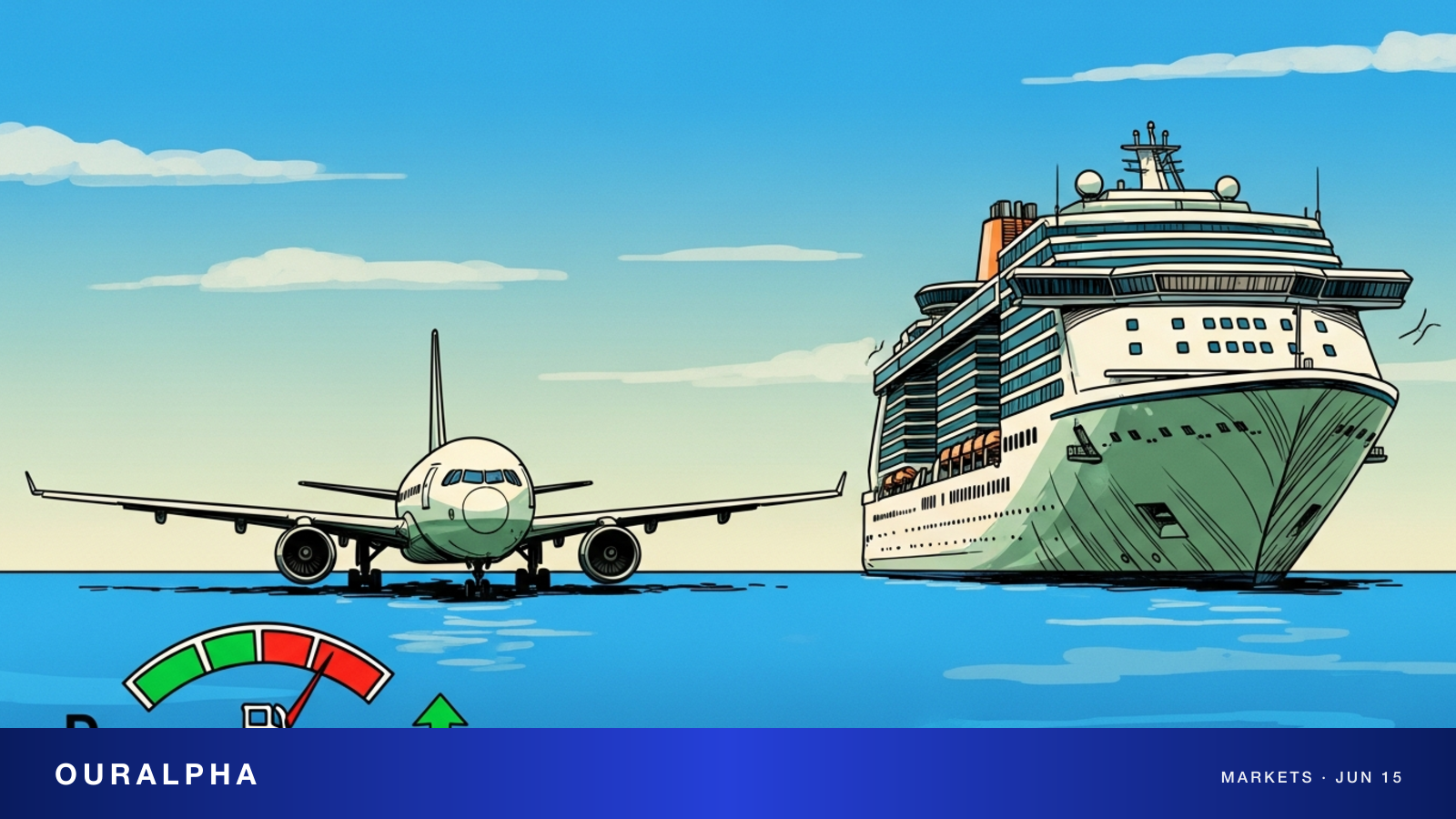
Bottom line: A U.S.-Iran deal sent oil sharply lower, and markets are broadly treating fuel-sensitive airlines, cruise lines, and logistics companies as potential beneficiaries of easing cost pressure. The thesis rests on cost relief — not a demand pickup.
- Brent crude August futures fell ~4% to roughly $83.77/bbl.
- Fuel is one of the largest variable costs for airlines and cruise lines, making both sectors highly sensitive to oil moves.
- Airlines in focus: Delta (DAL), United (UAL), American (AAL), Southwest (LUV).
- Cruise lines: Carnival (CCL), Royal Caribbean (RCL), Norwegian Cruise Line (NCLH); Logistics: FedEx (FDX), UPS, XPO.
- The key distinction: this is a cost-side story, not a demand-side story — the two have very different implications for earnings.
After a U.S.-Iran deal drove a sharp drop in crude prices, investors turned their attention to sectors where fuel is a major cost driver. According to CNBC, Brent August futures fell roughly 4% to around $83.77/bbl[CNBC]. For airlines, cruise lines, and logistics companies, fuel is one of the biggest variable costs on the P&L — so the selloff in crude is being widely framed as a cost-side tailwind for these names.
Which sectors are most exposed to fuel costs
In public market discussion, three categories of companies tend to see the most direct impact from oil price moves, given how large fuel is as a share of their operating costs:
- Airlines: Delta Air Lines (DAL), United Airlines (UAL), American Airlines (AAL), Southwest Airlines (LUV);
- Cruise lines: Carnival (CCL), Royal Caribbean (RCL), Norwegian Cruise Line (NCLH);
- Logistics & freight: FedEx (FDX), UPS, XPO.
What these companies share is that fuel — jet fuel, marine fuel, diesel — represents a meaningful slice of operating expenses, making their cost structures directly sensitive to where oil trades.
Cost relief, not demand recovery
The critical distinction here is between two very different earnings drivers: lower costs versus stronger demand. When markets flag airlines and cruise lines as oil-drop beneficiaries, the argument runs through the former:
- Lower oil prices translate directly into lower fuel procurement costs;
- With ticket prices or freight rates held constant, that cost reduction can flow through to improved margins;
- None of this has anything to do with a sudden surge in travel demand — it's a cost-side shift, not a revenue-side one.
In other words, this is a "costs just got cheaper" story, not a "demand just exploded" story. The two have different earnings pathways, different sustainability profiles, and markets typically price them separately.
Historical sensitivity as a reference point
Past oil-price pullbacks offer some concrete context for how sensitive these stocks can be. A FinancialContent recap of an oil decline in March 2026 showed Delta (DAL) gaining roughly 4.0% and American Airlines (AAL) up about 5.2% on the move; Norwegian Cruise Line (NCLH) rose approximately 7.9% and Carnival (CCL) climbed around 6.0%[FinancialContent].
That same recap highlighted that some cruise operators carry outsized fuel exposure — Carnival, for instance, does not hedge its fuel costs, making it especially sensitive to energy price swings; for Norwegian, a 10% move in fuel prices corresponds to roughly $90 million in net income[FinancialContent]. To be clear, those are March 2026 figures cited to illustrate historical sensitivity — they don't imply anything about current or future stock performance.
Variables worth watching
Mapping a crude selloff directly onto sector upside still comes with caveats. First, fuel is only one line item — labor, fleet, and capacity costs all matter too. Second, whether oil stays lower depends on the formal signing and implementation of the June 19 agreement; geopolitical reversals remain a real risk (for more context, see The U.S.-Iran Deal: What Markets Are Actually Pricing In). Third, the Fed's rate decision this week will influence broad risk appetite and, by extension, near-term moves in these names. This article maps the market logic and publicly available data only, and does not constitute a recommendation on any individual security.
Sources
This content is for informational purposes only and does not constitute investment advice, trading advice, or any guarantee of returns.