Chip Stocks Hit With Profit-Taking, Dragging Nasdaq Lower — While the Dow Hits a New All-Time High
U.S. stocks split sharply on June 16: a wave of profit-taking hammered Nvidia, Broadcom, Micron, and AMD, pushing the Nasdaq down 1.15%, while the Dow climbed to a fresh record as money rotated into value and defensive plays.

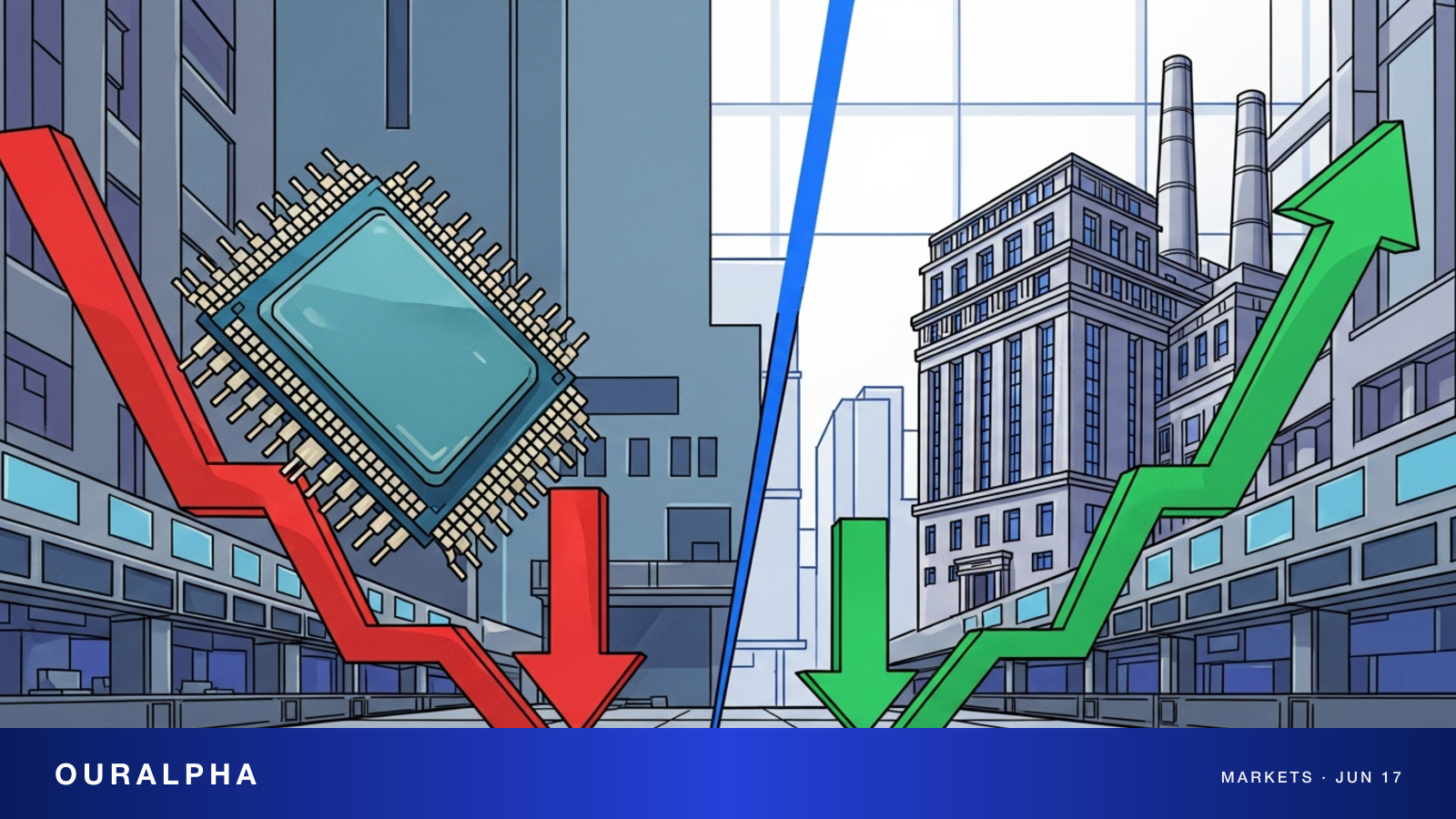
Bottom line: U.S. markets diverged sharply on Tuesday, June 16 — chip stocks led by Nvidia sold off after a multi-day run-up, pulling the Nasdaq lower, while the Dow Jones Industrial Average bucked the trend to close at a new all-time high as investors rotated out of high-multiple tech and into defensive and value plays.
- Nasdaq Composite fell 1.15%, closing at 26,376.34
- S&P 500 fell 0.57%, closing at 7,511.35
- Dow Jones Industrial Average rose 0.64%, closing at 51,999.67 — a new record high
- Nvidia (NVDA), Broadcom (AVGO), Micron (MU), and AMD led the Nasdaq lower, with analysts pointing to profit-taking after the recent rally
- Cloud computing infrastructure firm CoreWeave (CRWV) bucked the trend, surging roughly 10%
U.S. equities diverged on Tuesday, June 16, as chips and large-cap tech pulled back after several days of gains. The Nasdaq Composite dropped 1.15% to 26,376.34 and the S&P 500 slipped 0.57% to 7,511.35, while the Dow — weighted toward industrials and value stocks — climbed 0.64% to 51,999.67, notching yet another all-time high.[The Motley Fool]
Index and Sector Performance
The session was a textbook "tech cooldown, money rotation" day. By the numbers:
- Nasdaq Composite: -1.15%, closing at 26,376.34
- S&P 500: -0.57%, closing at 7,511.35
- Dow Jones Industrial Average: +0.64%, closing at 51,999.67 — a new all-time high
- Leading the decline: Nvidia (NVDA), Broadcom (AVGO), Micron (MU), and AMD — semiconductor heavyweights that were the primary drag on the Nasdaq
- Bucking the trend: Cloud compute provider CoreWeave (CRWV) surged roughly 10%
According to The Motley Fool, the pullback in high-profile tech and chip names "may have been due to profit-taking" as the momentum from the prior rally faded.[Yahoo Finance] In other words, no single bearish catalyst drove the selloff — it read more like traders locking in gains.
Chip Stocks Had Surged the Prior Session
Context matters here. Chip stocks had been one of the biggest winners the previous session on June 15, when the Nasdaq jumped roughly 3.07%. The Philadelphia Semiconductor Index ran higher, with Western Digital, Micron, Seagate, and Arm posting double-digit or near-double-digit gains. That rally was fueled in part by geopolitical relief — specifically, a U.S.-Iran ceasefire agreement that pushed oil prices lower.[TheStreet]
With that backdrop, the June 16 pullback in chips looks less like a trend break and more like a "give-back after a run-up" — a two-day round trip. One note on the data: intraday, pre-market, and after-hours moves can differ from official closing figures; all percentage changes cited here reflect regular-session closing prices on June 16.
Dow Record and the Style Rotation Story
While the Nasdaq and S&P slipped, the Dow's record close pointed to active reallocation across sectors. TheStreet reported that utilities and financials — classic defensive and value corners of the market — outperformed on the day, moving in tandem with a pullback in Treasury yields.[TheStreet]
The dynamic — high-multiple growth selling off while value and defensives gain — is what the Street typically calls a style rotation. That said, one session's divergence doesn't settle whether this is a durable shift or just a one-day breather; the jury is still out.
Macro Backdrop and Upcoming Catalysts
The Fed loomed large over the session. The FOMC's two-day meeting ran June 16–17, the first under new Chair Kevin Warsh, with the rate decision due Tuesday afternoon ET (Wednesday morning in Asia).[StockTitan]
Per StockTitan and other outlets, the market consensus was firmly for no change, with rates expected to hold at 3.50%–3.75% — CME FedWatch showed hike odds near zero. The real focus was on the post-meeting statement language, the updated dot plot, and whether the Fed would walk back any prior easing signals. Separately, U.S. markets are closed this Friday, June 19, for the Juneteenth holiday, leaving just two trading days left in the week.[TheStreet]
Sources
This content is for informational purposes only and does not constitute investment advice, trading advice, or any guarantee of returns.