Disney’s $50M Settlement: How Users Can Claim Their Share
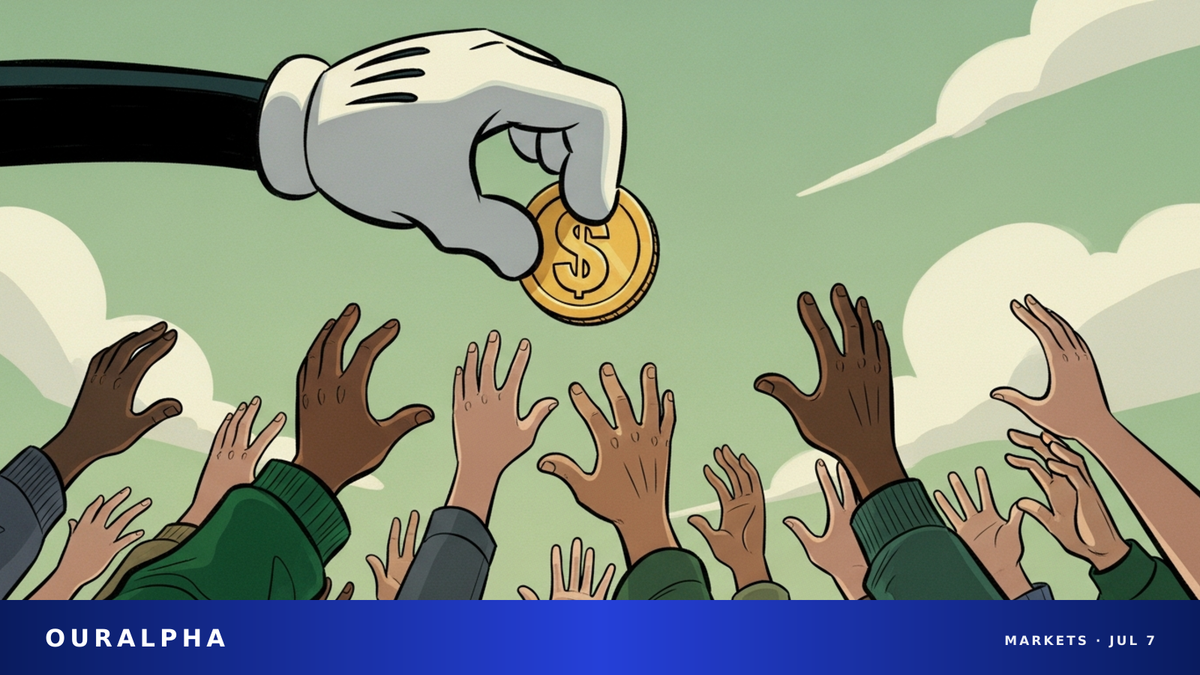
Disney agrees to pay $50 million to settle a class-action lawsuit over hidden auto-renewal fees on its streaming services. Eligible users can claim compensation with no extra steps required.
Disney (DIS) has agreed to pay $50 million to settle a class-action lawsuit alleging deceptive billing practices tied to its streaming services, including Disney+ and ESPN+. As of the close on July 6, Disney shares were at $97.41, down 2.10% from the prior close of $99.50.
- Settlement amount: $50 million to compensate affected subscribers.
- Services involved: Disney+, ESPN+, and Hulu (subscribed through Disney).
- Core claim: Users allege Disney failed to clearly disclose auto-renewal terms and made cancellations unnecessarily difficult.
- How to claim: Eligible users need no extra action; payments will be issued automatically or via an online form.
- Deadline: Users must file a claim or opt out by September 30, 2026.
- Stock reaction: Disney closed at $97.41, down 2.10% from the prior close, after touching an intraday low of $97.015.
Disney (DIS) on July 6 agreed to pay $50 million to settle a class-action lawsuit over its streaming subscription practices. The suit alleged that Disney failed to adequately disclose auto-renewal terms for Disney+, ESPN+, and Hulu (subscribed through Disney) and made it unnecessarily hard to cancel. As of the close on July 6, Disney shares were at $97.41, down 2.10% from the prior close of $99.50. The stock opened at $98.85, hit an intraday high of $99.44, and a low of $97.015.[USA Today]
Lawsuit Background and Settlement Details
The class action, first filed in 2023 by multiple users, accused Disney of not clearly and prominently disclosing that subscriptions would auto-renew, and of making the cancellation process complex and time-consuming. Plaintiffs argued that Disney’s “dark pattern” design charged users without their knowledge, violating federal and state consumer protection laws. Multiple media reports note that Disney did not admit any wrongdoing in the settlement but agreed to pay $50 million to resolve the case.[Shreveport Times]
Most of the settlement will go to affected users. Specifically, U.S. users who subscribed to Disney+, ESPN+, or Hulu directly through Disney (not via third parties like Amazon or Roku) between October 1, 2018, and July 6, 2026, and who experienced undisclosed auto-renewal or difficulty canceling, may be eligible. Each qualifying user is expected to receive between $10 and $50, depending on the total number of claims.[The Gardner News]
How Users Can Claim Compensation
For eligible users, the process is straightforward. Under the settlement, Disney will email all potentially affected users with details on eligibility and how to claim. Users need no additional evidence; they simply file a claim at the settlement website (settlement.disney.com) by September 30, 2026, or opt out to retain the right to sue separately. Users who take no action by the deadline forfeit any compensation and are bound by the settlement, losing the right to sue Disney over this issue.[News-Press]
Notably, some users may not need to file at all. If Disney already has payment and subscription records confirming eligibility, compensation will be issued automatically via account credit or check. However, Disney recommends all potential users check the settlement website to confirm eligibility. Users should also note that compensation may be taxable income; consulting a tax professional is advised.[PressConnects]
Market Reaction and Future Implications
Though the settlement is small relative to Disney’s roughly $200 billion market cap, the news weighed on the stock. Shares fell to an intraday low of $97.015 before closing at $97.41, down 2.10% from the prior close. Analysts suggest investors may be concerned that such lawsuits could invite broader regulatory scrutiny, especially given the widespread use of auto-renewal in streaming. Others argue the settlement removes legal uncertainty and has limited long-term impact on Disney’s operations.[The Town Talk]
This isn’t Disney’s first legal challenge over subscription terms. In 2024, Disney settled a similar class action in California for an undisclosed amount. As streaming competition intensifies, analysts say Disney and other platforms may need to further simplify subscription and cancellation processes to avoid future litigation.
Settlement Approval Process
The settlement still requires final approval from the U.S. District Court for the Central District of California. A fairness hearing is scheduled for October 15, 2026. If approved, payments would begin within 60 to 90 days after the hearing. If the court rejects the settlement, the case would proceed to trial, potentially exposing Disney to higher damages or penalties. Disney has stated it prefers to settle to avoid the time and cost of litigation.[USA Today]
For investors, the financial impact is largely priced in. Disney set aside roughly $45 million in litigation reserves in its Q2 2026 earnings, closely matching the settlement amount. So the settlement’s effect on future earnings is limited. Still, investors should watch for the court’s final decision and the number of claims filed, as these could indirectly affect Disney’s cash flow and reputation.
Sources
- USA Today — $50M Disney settlement: What to know to claim your share
- Shreveport Times — Disney streaming settlement: What to know to claim your share of $50M
- The Gardner News — Disney streaming settlement: What to know to claim your share of $50M
- News-Press — Disney streaming settlement: What to know to claim your share of $50M
- PressConnects — Disney streaming settlement: What to know to claim your share of $50M
- The Town Talk — Disney streaming settlement: What to know to claim your share of $50M
This content is for informational purposes only and does not constitute investment advice, trading advice, or any guarantee of returns.