Dollar Slides, Bitcoin Surges: How the US-Iran Deal Triggered a Risk-On Rotation
After the US and Iran announced a deal, the dollar fell against major currencies while Bitcoin jumped over 2% and risk-sensitive currencies rallied. Here's the market logic — and why the Fed meeting this week is the real variable to watch.

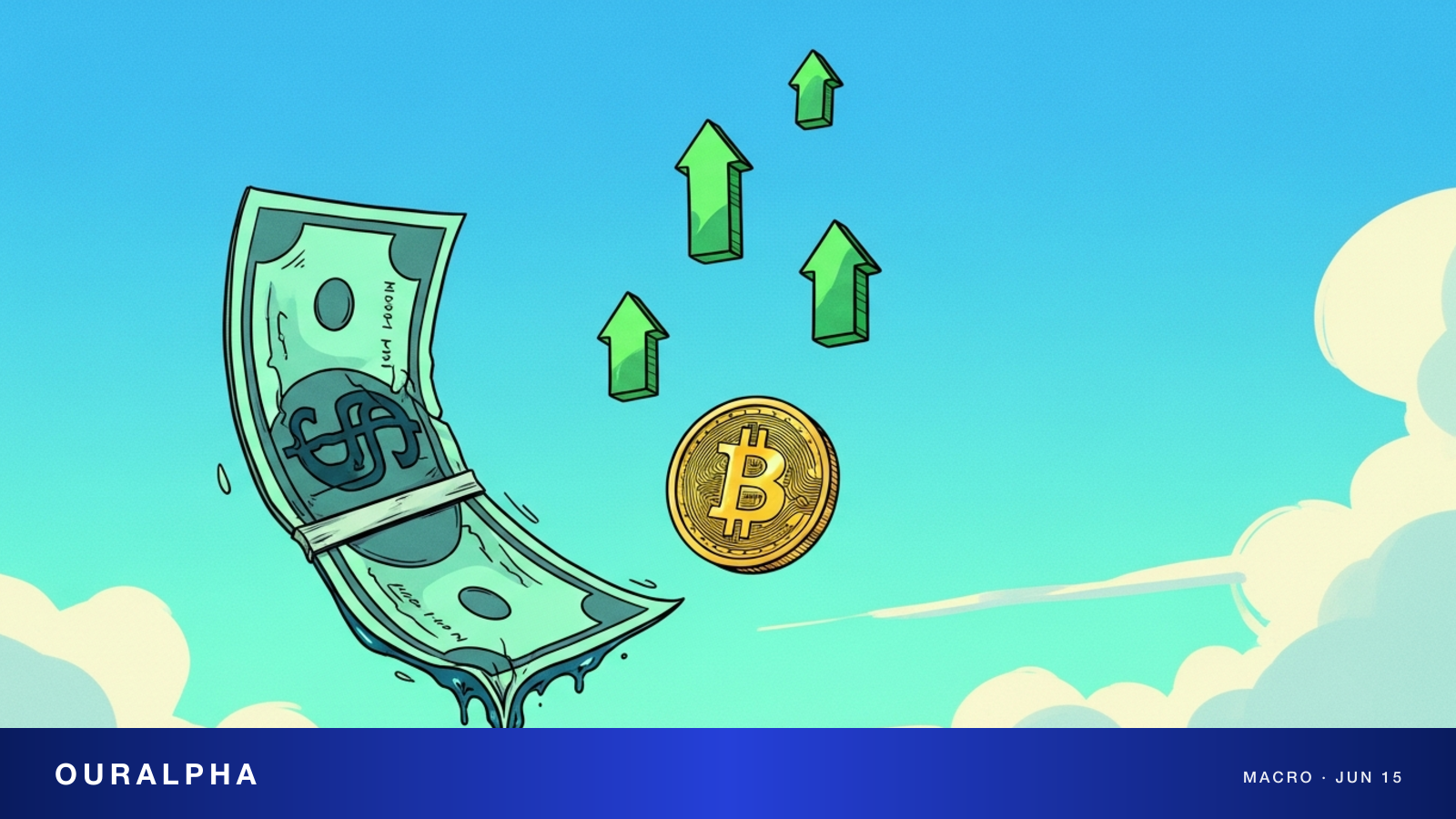
Bottom line: After the US and Iran announced a deal, the dollar weakened against major currencies, Bitcoin jumped over 2%, and risk-sensitive currencies rallied — a textbook risk-on rotation as safe-haven demand unwound.
- Per Bloomberg, the dollar fell against a basket of major currencies while Bitcoin climbed more than 2%.
- Per Reuters, the dollar touched a roughly 10-session low as risk currencies like the Australian and New Zealand dollars strengthened.
- Simultaneously, oil dropped sharply and US equity futures rose — the classic risk-on combination.
- Market logic: a weaker dollar tends to provide a tailwind for tech stocks, gold, crypto, and emerging markets.
- Key variable this week: the Fed's June 16–17 policy meeting, which will set the tone for where the dollar heads next.
Following the US-Iran deal announcement, FX markets moved in lockstep with equities and oil — against the dollar. Per Bloomberg, the dollar fell against a basket of major currencies in pre-market trading Monday, while Bitcoin rose more than 2%[Bloomberg]. FXStreet's forex recap noted the dollar briefly touched a roughly 10-session low as sentiment improved, with risk-sensitive currencies like the Australian and New Zealand dollars outperforming[FXStreet].
Dollar, Oil, and Stocks: All Moving in the Same Direction
The dollar's slide happened almost simultaneously with a sharp oil selloff and a rally in US equity futures — the market trifecta that traders call a risk-on move:
- Dollar weakens against major currencies; risk currencies (AUD, NZD) outperform;
- Brent crude drops roughly 4%;
- S&P 500 futures rise approximately 1%;
- Bitcoin and other crypto assets gain more than 2%.
During periods of geopolitical tension, the dollar tends to strengthen on safe-haven demand. When that tension eases, the premium unwinds. The same logic that drove oil's geopolitical risk premium lower applies here — both reflect the market repricing the tail risk of Middle East conflict escalation. (For broader market context, see What Markets Are Trading on the US-Iran Deal.)
Why a Weaker Dollar Is a Tailwind for Risk Assets
Markets broadly treat dollar weakness as a marginal positive for risk assets, through several well-worn transmission channels:
- Since the dollar is the world's primary pricing currency, a weaker dollar tends to support dollar-denominated commodities like gold;
- For emerging markets, dollar weakness eases pressure on external debt and reduces capital outflow risk;
- For US tech and growth stocks, dollar weakness often coincides with softer rate expectations — a favorable backdrop for high-multiple assets;
- In crypto, dollar weakness and rising risk appetite are typically read together as a signal of rotation into high-beta assets.
It's worth stressing that these are general market transmission mechanisms, not a directional call on any specific asset. Short-term dollar moves are driven by many factors, and geopolitical events are just one of them.
The Fed Is Still the Main Event
The bigger driver for FX markets this week is the Fed. The FOMC meets June 16–17 to set rates and publish updated economic projections (the SEP). Rate path expectations are typically the dominant medium-term driver of the dollar — with far more lasting impact than any single geopolitical catalyst.
It's also Kevin Warsh's first meeting as Fed Chair, and markets are watching closely for any shift in communication style (see Fed Meeting Preview: What to Expect from Warsh's Debut). If this week's meeting delivers a policy signal that diverges from current expectations, the dollar's geopolitical-driven weakness may prove short-lived.
Sources
This content is for informational purposes only and does not constitute investment advice, trading advice, or any guarantee of returns.