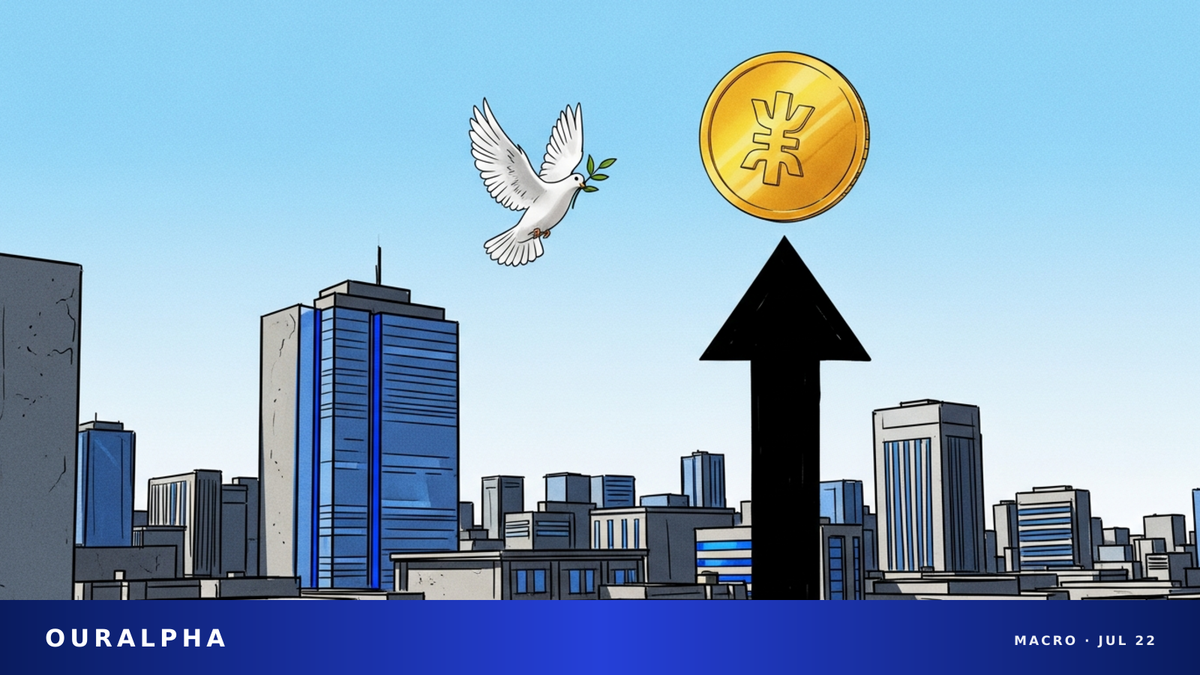
Gold Hits Two-Week High as Fed Outlook, Mideast Conflict Stay in Focus
Gold rallied to a two-week high as investors weighed escalating Middle East tensions against next week's Fed meeting. Analysts warn downside risks persist as interest rates remain the key driver.
Gold climbed to a two-week high in Asian trading Wednesday, as investors weighed an expanding Middle East conflict against next week's Fed meeting for clues on the rate path.
- Spot gold rose 1.6% to $4,139.64 an ounce Wednesday, the highest since July 7.[CNBC]
- Gold gained 0.9% Tuesday to settle at $4,042.69, lifted by hopes for U.S.-Iran diplomacy.[CNBC]
- The front-month gold futures contract jumped $72.30 (1.80%) Tuesday, the biggest single-day gain since July 2.[Kitco]
- StoneX analysts say interest rates remain the key driver for precious metals, with downside risk still present.[Kitco]
- Silver futures rose 3.50% to $59.07 Tuesday, extending gains for a third straight session.[Kitco]
- As of 2:00 a.m. ET (14:00 Beijing time) Wednesday, spot gold was trading at $4,139.64.
Gold extended its rally in Asian trading Wednesday, touching a two-week high. Spot gold rose 1.6% to $4,139.64 an ounce, the highest since July 7, according to CNBC. Market participants are weighing the impact of an expanding Middle East conflict on energy prices and inflation, while awaiting next week's Fed meeting for clues on the rate outlook.[CNBC]
Middle East Conflict and Diplomacy Swings Drive Gold
Gold's recent rally is closely tied to the evolving geopolitical situation in the Middle East. On Tuesday, spot gold rose 0.9% to $4,042.69 as investors weighed diplomatic efforts to de-escalate the U.S.-Iran conflict, which could ease oil-driven inflation risks and influence the Fed's rate path.[CNBC]
Kitco analysts Gary Wagner and Joseph Wagner noted that the front-month gold futures contract jumped $72.30 (1.80%) Tuesday, the biggest single-day gain since July 2. They attributed the rally to market expectations of a Middle East ceasefire — after Iranian officials reported Monday that Tehran had received a 10-day truce proposal from mediators, part of Washington's effort to salvage its interim deal.[Kitco]
However, the analysts cautioned that such news should be taken with a grain of salt, given the repeated pattern of hopeful statements. At the same time, contradicting the narrative of easing geopolitical tensions, both crude oil and the dollar rose Tuesday: WTI crude gained nearly $2 (2.32%) to $84.39 a barrel, up 25.95% over the past 24 days; the dollar index rose for a fourth straight session, breaking above 101 to 101.20.[Kitco]
CNBC also reported that the escalation of the U.S.-Iran conflict over the weekend forced Wall Street to reassess the war's economic impact. While stocks continue to shrug off the latest tensions, economists worry that another surge in energy prices could weigh on consumers and the broader economy.[CNBC]
Interest Rates Still Key Driver, StoneX Warns Downside Risk
Despite ongoing Middle East tensions, StoneX analysts argue that interest rates remain the key driver for precious metals. Rhona O'Connell, StoneX's head of EMEA and Asia market analysis, wrote in the firm's Monday precious metals weekly: "After a period of uncertainty that kept retail investors on the sidelines, there are signs of some buying in parts of the Far East — but this is offset by continued selling elsewhere in the region, resulting in a near-zero-sum game."[Kitco]
O'Connell said activity in the Middle East remains subdued, with gold mostly trading at a discount, although interest in both metals is picking up in India (the world's largest consumer of silver jewelry and silverware, accounting for 51% of that segment and 9% of global total consumption). She said this could provide support, but not enough to lift prices. The professional market continues to avoid short-term activity, except for immediate reactions to rate moves — which themselves are driven by geopolitics.[Kitco]
O'Connell warned: "The narrow range remains the norm, and we still see downside as slightly more likely than a sustained rebound." She also analyzed the June CPI data, noting that energy costs have a disproportionate impact on overall spending. While WTI crude is down 26% from its April 6 high of $113, it is still up 24% YoY. If the Middle East stabilizes, oil could drift toward $70 over the next 12 months or so, but supply chain disruptions take time to digest and won't eliminate inflation pressure.[Kitco]
Silver Bounces in Tandem but Remains Weak Overall
Silver prices have also rebounded recently. Kitco data showed silver futures rose 3.50% to $59.07 Tuesday, extending gains for a third straight session. Spot silver encountered resistance near $58.77, which coincides with the 20-day simple moving average, but has yet to test the 20-day exponential moving average of $59.81.[Kitco]
According to Bitget, citing Mining.com, silver futures bounced from an eight-month low Monday, rising 1.5% to $56.74 an ounce, after hitting $55.50 on Friday — the weakest level since late November 2025. Silver fell about 5% last week. Over the same period, gold edged down 0.3% to $4,005, barely holding the $4,000 level after dipping to $3,986 on Thursday.[Bitget]
The report noted that silver is down 20% in 2026, 53% below its January all-time high of $121.64 an ounce, but still up nearly 49% over the past 12 months. Gold is down 7% this year, but still up about 20% YoY.[Bitget]
Fed Meeting Looms, Market Focuses on Rate Path
Market attention is shifting to next week's Fed meeting. O'Connell noted the Fed has entered its blackout period. Recent FOMC member comments have been mixed: Christopher Waller, previously dovish, has changed his stance, saying last week that the Fed may need to raise rates if future inflation data remains strong. He cited tariffs, high energy prices, and AI-related investment. The committee remains divided, with roughly 50% of members supporting further tightening if inflation persists, while the rest favor holding steady.[Kitco]
Kitco's Gary Wagner and Joseph Wagner noted that ceasefire expectations had a direct impact on rate-hike expectations, pushing the probability of a hike this month from 16% to 26%. Traders now see a 15.8% chance of a half-point rate hike by the September FOMC meeting.[Kitco]
According to a Bitget-cited report, swap traders see a slightly higher than 10% chance of a rate hike at the July meeting, but have fully priced in at least one hike by year-end. Cleveland Fed President Beth Hammack also joined the growing ranks of officials expressing concern about inflation last week.[Bitget]
Justin Lin, an analyst at Global X ETFs, told Bloomberg: "Gold's relatively muted reaction to the oil price surge reflects, in my view, a certain investor apathy toward geopolitics." He added that investor focus is shifting to the Fed's rate path.[Bitget]
Sources
- CNBC — Gold hits two-week high as Fed outlook, Middle East conflict stay in focus
- CNBC — Gold rises as hopes for U.S.-Iran diplomacy pause oil rally
- Kitco — Gold holds ground at $4,000 and moves higher
- Kitco — Despite Middle East escalation, interest rates remain the key price driver for gold and silver – StoneX
- Bitget — Silver rebounds from 8-month low, gold price defends $4,000
This content is for informational purposes only and does not constitute investment advice, trading advice, or any guarantee of returns.