U.S.-Iran Deal Sends Stock Futures Higher, Oil Tumbling — What Markets Are Pricing In
The U.S. and Iran announced a deal to end hostilities and reopen the Strait of Hormuz over the weekend, sending S&P 500 futures up ~1% and Brent crude down ~4% on Monday. Here's what the agreement says and what to watch next.

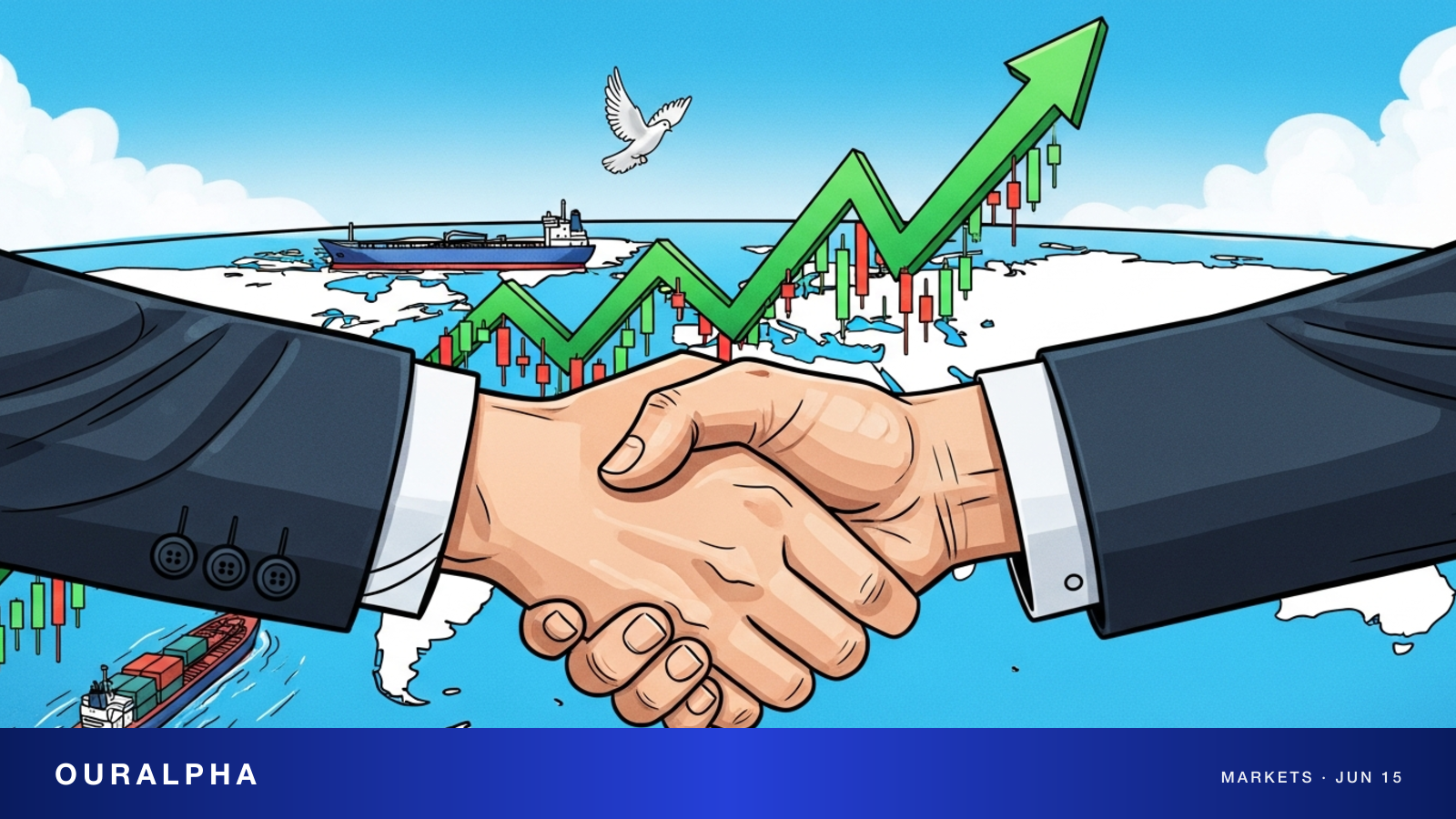
The short version: The U.S. and Iran announced a deal to end the conflict and reopen the Strait of Hormuz over the weekend, pushing U.S. equity futures higher and sending oil sharply lower on Monday, June 15 — a broad unwind of the geopolitical risk premium that had built up over recent weeks.
- S&P 500 futures rose ~1%, while an Asian equity benchmark climbed as much as ~2.8% in early trading, per Bloomberg.
- Dow futures jumped more than 350 points premarket; Nasdaq 100 futures gained ~1.6%, per MarketWatch.
- Brent crude August futures fell ~4% to ~$83.77/bbl; WTI dropped below $81, hitting a roughly two-month low.
- The dollar weakened against major currencies; Bitcoin gained more than 2%.
- Key deal terms: Strait of Hormuz reopened toll-free, U.S. naval blockade of Iran lifted, 60-day nuclear negotiation window opened.
- The Fed's June 16–17 FOMC meeting is the week's next major catalyst.
The weekend's most market-moving macro event was the announcement of a U.S.-Iran deal to end the conflict. President Trump and Pakistani Prime Minister Shehbaz Sharif both confirmed an agreement had been reached, per CNBC and Bloomberg — one that includes reopening the Strait of Hormuz, lifting the U.S. naval blockade of Iran, and launching a 60-day window for nuclear negotiations[CNBC]. Equity futures moved higher and oil fell sharply ahead of Monday's open, as sentiment shifted from the defensive posture markets had held for weeks toward outright risk-on.
What the Agreement Says
Across multiple media reports, the deal's core provisions center on energy transit and ceasefire arrangements:
- An immediate and permanent halt to military operations on all fronts, including in Lebanon;
- The Strait of Hormuz reopened toll-free, with the U.S. naval blockade of Iranian ports lifted;
- A roughly 60-day negotiating period on the future of Iran's nuclear program;
- A formal signing ceremony set for June 19 in Switzerland, per Bloomberg and CNN[Bloomberg].
One caveat worth flagging: multiple outlets note that Washington and Tehran are not fully aligned on certain details — for instance, the degree of financial relief Iran will receive. Whether those discrepancies are messaging differences or unresolved substantive gaps should become clearer when the formal text is signed on June 19[TIME].
Monday's Premarket Reaction
The de-escalation read-through showed up immediately in risk asset pricing. S&P 500 futures were up ~1% ahead of Monday's open, an Asian equity benchmark briefly rallied ~2.8%, the dollar softened against a basket of major currencies, and Bitcoin gained more than 2%, per Bloomberg[Bloomberg].
Per MarketWatch, Dow futures jumped more than 350 points premarket while Nasdaq 100 futures climbed ~1.6% — with rate-sensitive tech futures outpacing the broader move, as they tend to in risk-on openings.
Oil: The Central Variable in This Trade
The oil move was the headline number. Brent August futures fell ~4% to ~$83.77/bbl, while WTI briefly broke below $81 — a roughly two-month low — per CNBC[CNBC].
The Strait of Hormuz carries a significant share of global seaborne oil, and fears of a closure had been a key driver of elevated crude prices over the past month-plus. With the reopening written into the deal, supply-disruption risk eased at the margin — and oil repriced accordingly. For a fuller look at how the oil drop feeds through to inflation expectations, see our companion piece: How the Oil Selloff Eases Inflation Pressure.
Building on Last Week's Rally
This isn't a standalone move. Last Thursday, June 11, U.S. equities staged a broad rally after Trump called off a planned strike on Iran and oil pulled back — the Dow briefly reclaimed 50,000. (See: Markets Rally as Iran Strike Scrapped, Dow Tops 50,000.) Monday's premarket surge is a continuation and confirmation of that same trade.
That said, premarket futures moves don't always carry through to the close — geopolitical events tend to drive sentiment-level reactions first. The June 19 signing, the fine print on deal terms, and this week's Fed meeting all remain live variables that could pull the move in either direction.
What's on the Calendar
The Fed dominates the macro agenda this week. The FOMC meets June 16–17 and will release its rate decision alongside updated economic projections (the SEP). It's also the first meeting chaired by Kevin Warsh since he took over as Fed Chair. (See: FOMC Preview: Warsh's First Meeting at the Helm.) Whether the risk-on mood sparked by the Iran deal holds will depend heavily on what comes out of Washington this week — both from Geneva and the Fed.
Sources
This content is for informational purposes only and does not constitute investment advice, trading advice, or any guarantee of returns.