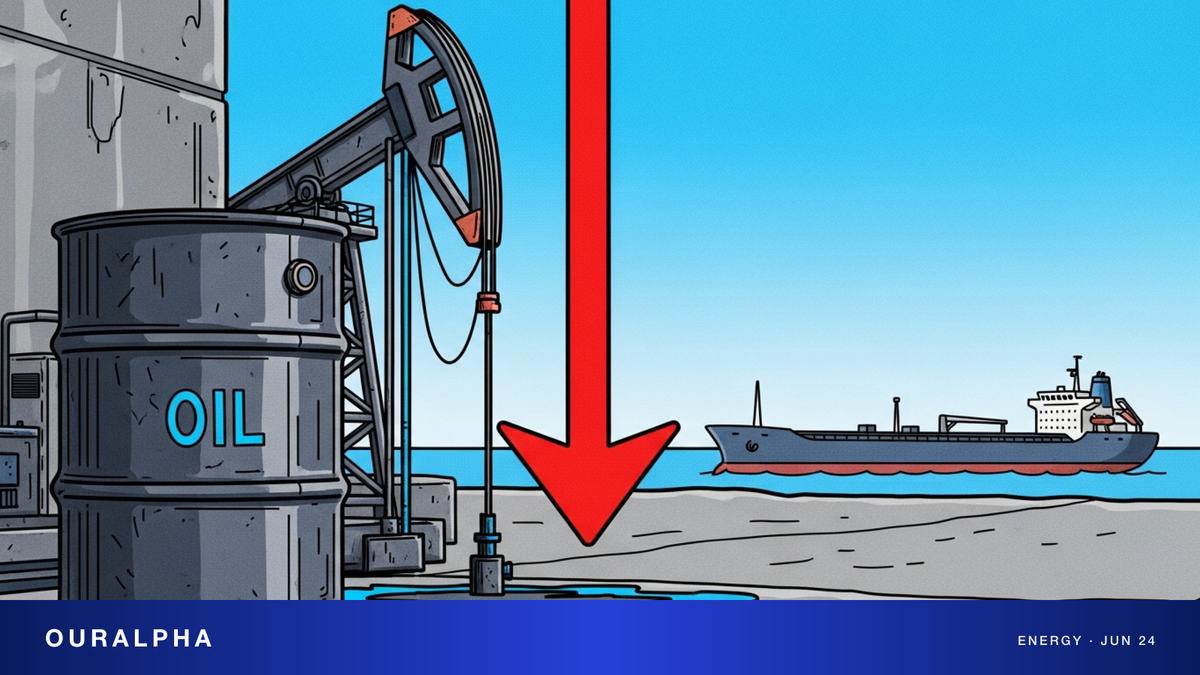
WTI Crude Drops Below $70, Brent Hits Pre-War Low as Hormuz Strait Opens Up
Oil prices sold off sharply on June 24: WTI crude settled at $70.34/bbl (−3.92%), briefly dipping below $70 for the first time since March 2, while Brent fell 4.3% to $73.74 — its lowest close since before the February Middle East escalation. Improving tanker transit through the Strait…
Oil prices tumbled on Wednesday, June 24, with WTI crude — the U.S. benchmark — briefly trading below $70 per barrel for the first time since early March, and Brent crude settling at its lowest level since before the Middle East conflict erupted in February. Improving tanker transit through the Strait of Hormuz and progress in U.S.-Iran negotiations drove the selloff.
- WTI crude futures settled at $70.34/bbl, down ~3.92%; intraday low of $69.63[CNBC]
- Brent crude futures settled at $73.74/bbl, down ~4.3%
- WTI's first breach of $70 since March 2
- Key driver: increased tanker transits through the Strait of Hormuz, combined with U.S.-Iran talks progress, eased supply disruption fears
- Per the IMO, more than 11,000 seafarers stranded in the Persian Gulf will begin evacuating via the Strait of Hormuz
- Per the IEA, UAE crude exports have recovered to roughly 85% of pre-war levels
Oil prices sold off sharply on Wednesday, June 24. Per CNBC, WTI crude futures settled at $70.34 per barrel, down roughly 3.92%, after hitting an intraday low of $69.63 — the first time WTI has traded below $70 since March 2. Brent crude, the international benchmark, settled at $73.74 per barrel, off about 4.3%, its lowest close since before the U.S. and Israel struck Iran in February. CNBC attributed the decline to improving conditions in the Strait of Hormuz and progress in U.S.-Iran negotiations, which together eased fears of a sustained Middle East supply disruption.[CNBC]
Daily Price Data
- WTI crude futures: settled at $70.34/bbl, down ~3.92%; intraday low of $69.63
- Brent crude futures: settled at $73.74/bbl, down ~4.3%
- WTI's first close below $70 since March 2; Brent's lowest level since before the February escalation
Drivers of the Selloff
Per CNBC, the drop was concentrated in easing Middle East supply fears:
- Increased tanker transits through the Strait of Hormuz, alongside progress in U.S.-Iran talks, reduced market expectations of a supply disruption
- The IMO said more than 11,000 seafarers stranded in the Persian Gulf will begin evacuating via the Strait of Hormuz following security assurances[CNBC]
- President Trump said tankers transiting the strait will not face passage fees, insurance levies, or any other charges
- The IEA estimated UAE crude exports have recovered to roughly 85% of pre-war levels, with approximately 60 million barrels recently sold from the Persian Gulf
What to Watch
With prices breaking key levels, markets will be tracking the trajectory of Strait of Hormuz transit and U.S.-Iran negotiations, the pace of supply recovery among major producers, and the downstream impact of lower oil on inflation data. All prices and attribution above are drawn from CNBC and other media reports; official exchange settlements and government disclosures are the definitive record. This article contains no directional price outlook.
Sources
This content is for informational purposes only and does not constitute investment advice, trading advice, or any guarantee of returns.