Oil Drops ~4% on Iran Deal — Here's Why the Stock Market Is Cheering
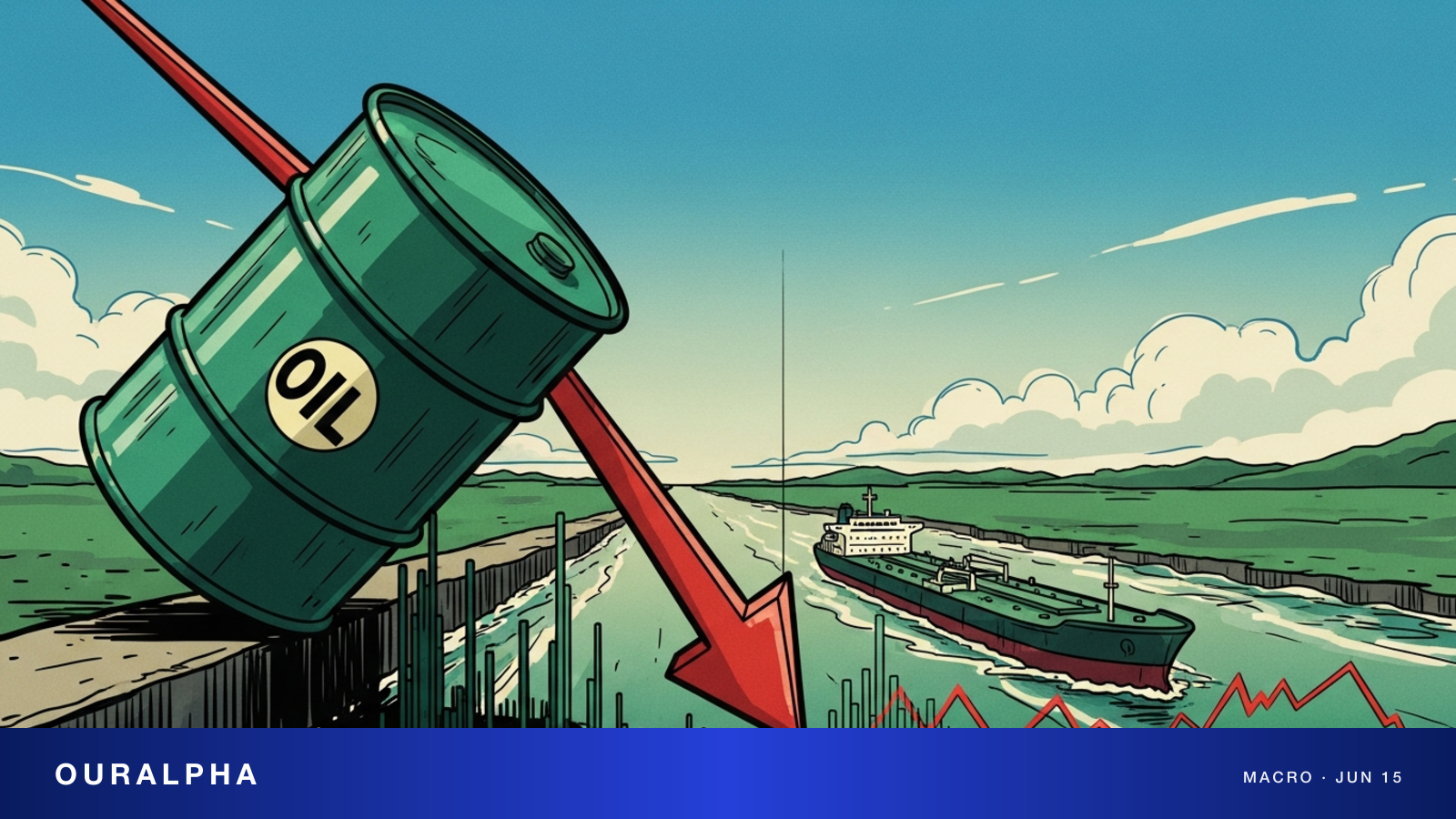
After the U.S. and Iran announced a deal to reopen the Strait of Hormuz, crude oil plunged roughly 4%. Markets aren't just reading this as an energy story — they're pricing it as an inflation reprieve.

Bottom line: After the U.S. and Iran announced a deal to reopen the Strait of Hormuz, crude oil sold off sharply. Markets are reading the move primarily through an inflation lens — not just as bad news for energy stocks.
- Brent crude August futures fell roughly 4% to ~$83.77/bbl.
- WTI briefly broke below $81/bbl, hitting a roughly two-month low.
- The catalyst: an agreement to reopen the Strait of Hormuz toll-free, paired with the U.S. lifting its naval blockade of Iranian ports.
- Per BLS, U.S. May CPI rose 4.2% YoY — energy prices accounted for more than 60% of that monthly gain.
- The market logic: lower oil → cooler inflation → more Fed flexibility. Each link in that chain still needs data to confirm it.
Crude oil fell sharply after the U.S. and Iran announced a deal. Per CNBC, Brent August futures dropped roughly 4% to ~$83.77/bbl, while WTI briefly broke below $81 — its lowest level in about two months[CNBC]. Across Wall Street, the move is being discussed not simply as an energy-sector headwind but as a potential inflation data point.
Why Oil Sold Off
The immediate trigger was a shift in the outlook for a critical global shipping chokepoint. Under the deal, the Strait of Hormuz would reopen without transit fees, the U.S. would end its naval blockade of Iranian ports, and Trump signaled that Persian Gulf oil flows could resume "very soon"[CNBC].
The Strait carries a substantial share of the world's seaborne crude. Fears that conflict could disrupt that corridor had been baked into oil prices as a geopolitical risk premium. Once a formal reopening entered the agreement text, markets moved quickly to unwind it. Per Bloomberg, the oil drop coincided with a weaker dollar and a rotation into risk assets[Bloomberg].
Why This Reads as a Stock Market Tailwind
The bullish read on equities runs through a transmission chain that's become a market staple:
- Energy is one of the most volatile and heavily weighted components of CPI;
- cheaper oil could take the edge off headline inflation prints in the coming months;
- softer inflation gives the Fed room to avoid staying aggressively hawkish;
- lower rate expectations benefit growth and tech stocks most sensitive to discount-rate moves.
The recent inflation data makes the connection concrete. Per BLS, May CPI rose 4.2% YoY — a roughly three-year high — with energy accounting for more than 60% of that monthly increase, itself driven largely by the Iran conflict pushing oil higher[CNBC]. In other words, the variable that inflated the print is now the variable that's pulling back.
The Chain Is Not Automatic
Each link carries real uncertainty. First, core CPI — stripping out food and energy — still came in at 2.9% YoY in May, so inflation isn't purely an energy story (see May CPI at 4.2%: Why It's Still the Fed's Biggest Constraint). Second, whether oil stays down depends on the formal signing and implementation of the deal on June 19 — the geopolitical situation could still reverse. Third, there's a lag between oil prices moving and CPI readings reflecting it; one month of data isn't a trend.
That's precisely why many desks are framing the risk-on move as a sentiment and expectations reset, not a confirmed fundamental shift — one that still needs follow-through from upcoming inflation and jobs data to stick (for broader market context, see U.S.-Iran Deal: What the Market Is Actually Trading).
What to Watch Next
Markets will now track oil alongside this week's Fed meeting. The FOMC meets June 16–17 and will issue its rate decision. The key questions: does the oil drop shift policymakers' read on the inflation path, and how will they weigh it against May PPI, which came in hot at 6.5% YoY (see May PPI: Wholesale Inflation Hits 6.5%)?
Sources
This content is for informational purposes only and does not constitute investment advice, trading advice, or any guarantee of returns.