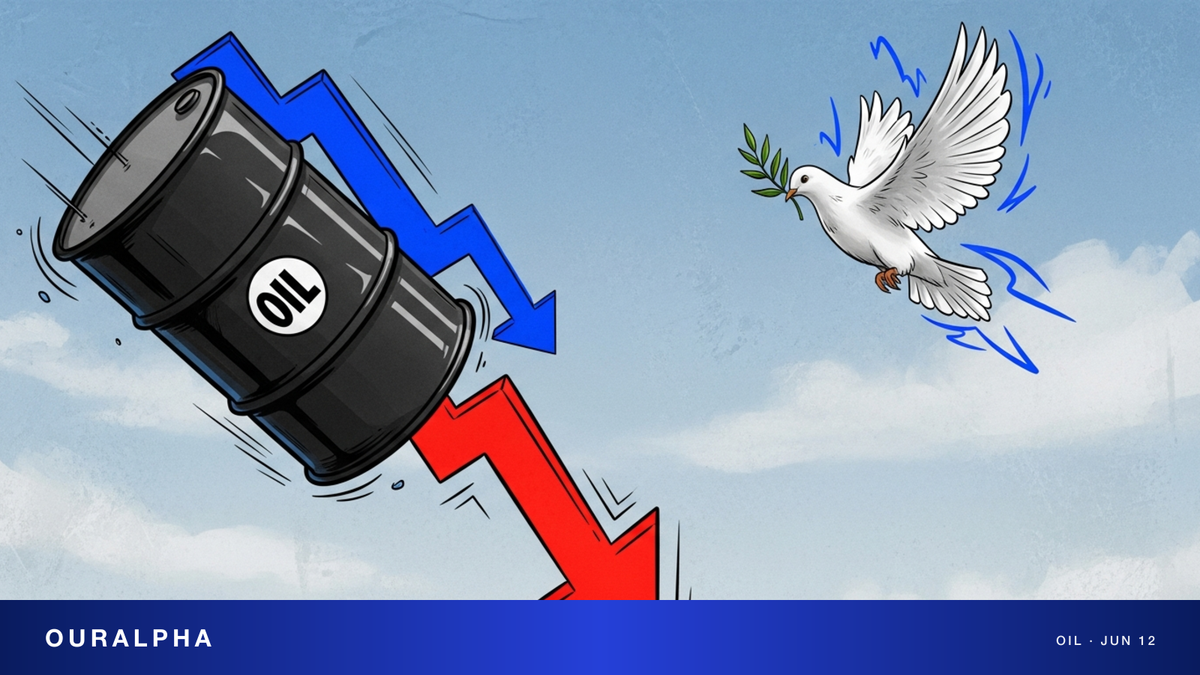
Trump Says U.S.-Iran Deal Is Coming — Oil Drops More Than 2%
Trump called off a planned strike on Iran and told reporters a peace deal is "essentially done." WTI tumbled more than 2% to $87.71, and Brent fell roughly 3% to $90.38 — erasing weeks of geopolitical risk premium in a single session.
Bottom line: President Trump abruptly called off a planned U.S. airstrike on Iran, announcing that the two sides had reached a settlement to end the war and that a formal agreement was days away from being signed. Crude oil sold off sharply, and U.S. equities rallied as risk appetite improved.
- WTI closed down more than 2% at $87.71/bbl; it fell a further ~3.9% to $86.51 in after-hours trading.
- Brent settled down ~3% at $90.38/bbl; after-hours it slid ~4.2% to $89.15.
- Trump said the U.S. and Iran had reached "a very good settlement to end the war," pending final documentation.
- He expects both sides to formally sign in Europe "within the next few days."
- The oil selloff was read by markets as a meaningful easing of inflation and supply-chain pressure.
- All three major U.S. equity indexes closed higher; the Dow reclaimed 50,000.
On Thursday, June 11, international crude prices pulled back sharply after Washington signaled a dramatic de-escalation with Tehran. According to CNBC, President Trump abruptly scrapped a strike on Iran that had been set for that evening, citing ongoing negotiations, and told reporters the two countries had reached "a very good settlement to end the war"[CNBC]. The announcement reversed weeks of upward pressure on oil driven by the escalating U.S.-Iran conflict.
Oil Price Moves: Regular Session and After-Hours
Per CNBC and market data, here is how crude moved after the news broke:
- WTI futures closed down more than 2% at $87.71/bbl during the regular session, then fell a further ~3.9% to $86.51 in extended trading.
- Brent futures settled down ~3% at $90.38/bbl, then declined ~4.2% to $89.15 after hours[CNBC].
The gap between the closing print and the after-hours move reflects the market continuing to digest the news as more details emerged through the evening.
What Trump Actually Said
According to CNBC, Trump told reporters that the U.S. and Iran had reached "a very good settlement to end the war," with the deal "subject to getting documentation done." He said he expects the agreement to be signed in Europe "within the next few days"[CNBC].
That stands in stark contrast to where things stood just weeks ago. CNBC had previously reported that U.S.-Iran tensions escalated sharply starting in May, with markets pricing in risk to transit through the Strait of Hormuz — a critical chokepoint for global oil flows. Brent had briefly approached $126/bbl in late April on conflict fears[CNBC]. The retreat from above $120 to the low $90s reflects a rapid unwinding of that geopolitical risk premium.
Oil to Equities: How the Move Transmitted
The crude selloff was a meaningful tailwind for stocks on the day. Per TheStreet's market recap, investor sentiment improved alongside falling oil prices — compounded by tech buying ahead of the SpaceX (SPCX) listing — pushing all three major indexes higher. The Dow Jones Industrial Average gained ~1.86%, rising nearly 930 points to reclaim the 50,000 level[TheStreet].
The transmission mechanism is straightforward: oil is a key input into headline inflation, so lower crude reduces pressure on the Fed to tighten further. That said, this dynamic coexisted on the same day with a hot wholesale inflation print — May PPI came in at +6.5% YoY, with wholesale gasoline prices surging more than 23% month-over-month. Crucially, that data reflects May conditions and does not yet capture June's oil price decline[CNBC].
The Deal Isn't Done Yet
Based on what is publicly known, the U.S.-Iran settlement remains at the "agreed in principle, awaiting signature" stage — Trump himself conditioned it on documentation being finalized. Key things to watch: the timing and substance of a formal signing; whether Iranian oil exports and Strait of Hormuz transit actually normalize; and whether the oil price decline carries through into June data. Those factors will determine whether this unwinding of the geopolitical risk premium is a durable trend or just a one-session reprieve.
Sources
This content is for informational purposes only and does not constitute investment advice, trading advice, or any guarantee of returns.