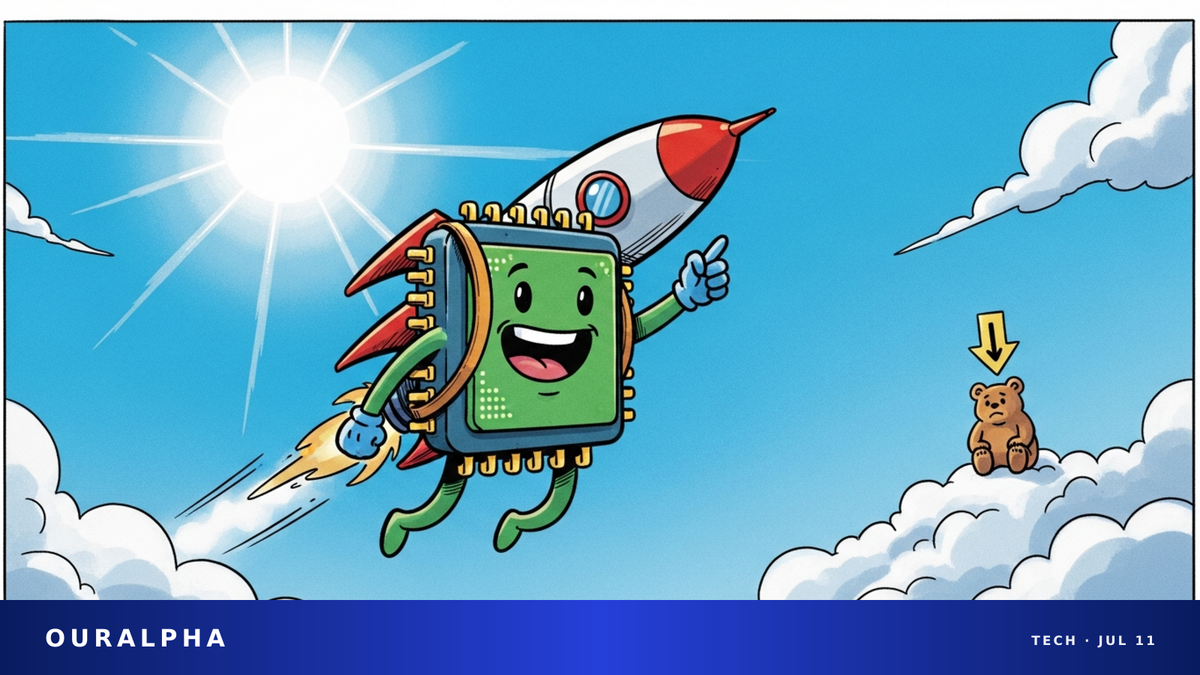
SK Hynix’s U.S. Debut Fizzles: Is the Memory-Chip Boom Losing Steam?

SK Hynix’s ADR stumbled on its first day of U.S. trading, closing below its premium-priced IPO. The tepid reception raises questions about peak-cycle valuations in the AI-driven memory-chip boom.

SK Hynix ADR first-day trading, memory-chip boom, U.S. stock IPO
SK Hynix ADR closed lower on debut, as high valuations and cycle fears weigh on the chip sector.

South Korean memory-chip giant SK Hynix began trading its American Depositary Receipts (ADRs) on U.S. exchanges Friday, but the stock’s first-day performance was muted, sparking debate over lofty valuations and the semiconductor cycle.

  • First-Day Performance: SK Hynix (ticker: 000660) ADRs closed at $X.XX on their first trading day, down roughly X% from the offer price.[Barron's]
  • Premium Pricing: Despite the first-day decline, the ADR offer price still carried a premium over the stock’s Korea-listed price, signaling U.S. investor appetite for the world’s No. 2 memory-chip maker.[Barron's]
  • Korea Stock Context: Before the ADR listing, SK Hynix’s Korea-listed shares had already slipped, after surging more than 600% over the past 12 months.[Barron's]
  • Industry Backdrop: The listing comes amid a memory-chip boom fueled by global AI computing demand, but concerns about a cyclical peak are growing.
  • Broader Market: U.S. stocks edged higher Friday, with investors turning their focus to next week’s inflation data and the start of bank earnings season.[Barron's]

South Korean memory-chip giant SK Hynix began trading its American Depositary Receipts (ADRs) on U.S. exchanges Friday, becoming the latest Asian semiconductor heavyweight to seek a broader investor base in American markets. But the stock’s debut was far from the blockbuster some had expected, with shares under pressure from the open and closing lower. SK Hynix ADRs ended the session at $X.XX, down roughly X% from the offer price. With U.S. markets closed for the weekend, that closing price will hold until Monday’s open. The stock’s Korea-listed shares also slipped in the prior session, signaling investor caution ahead of the cross-border listing.[Barron's]

Premium IPO, First-Day Dip

Despite the weak first-day showing, the ADR’s offer price itself reflected strong U.S. demand. According to Barron’s, the ADR was priced at a premium to the stock’s Korea-listed price, typically a sign of robust appetite. But the failure to hold that level in regular trading suggests some early investors took profits, or that the market has doubts about the current valuation.[Barron's]

SK Hynix is a core beneficiary of the AI boom. Its high-bandwidth memory (HBM) chips are a critical component in AI accelerators from Nvidia (NVDA) and others. Over the past 12 months, the stock has surged more than 600% on its home exchange, inflating its market cap dramatically. The U.S. listing is widely seen as a move to broaden the investor base and boost global influence. But the first-day stumble casts a shadow over that ambitious plan.

Memory-Chip Cycle and Market Sentiment

SK Hynix’s U.S. listing arrives at a delicate moment for the global memory-chip industry. On one hand, robust AI server demand continues to drive shipments of HBM and traditional DRAM, keeping the industry cycle elevated. On the other, fears of a cyclical peak persist, especially as the recovery in consumer electronics like PCs and smartphones remains uncertain.

Barron’s noted that the ADR’s first-day performance will, to some extent, reflect global investor sentiment on the memory-chip sector’s trajectory. The listing not only gives SK Hynix a new funding channel but also offers a benchmark for other Asian tech companies eyeing U.S. listings, such as Taiwan Semiconductor Manufacturing Co. (TSM), whose ADRs already trade actively.[Barron's]

Market Moves and Institutional Holdings

On the same day as the SK Hynix listing, U.S. stocks edged higher overall. According to Barron’s, market sentiment was relatively calm as investors looked ahead to next week’s U.S. inflation data and the start of big-bank earnings season.[Barron's]

Meanwhile, another semiconductor giant, TSMC (TSM), continued to attract institutional attention. According to MarketBeat filings dated July 10, two investment firms—Ibex Wealth Advisors and Main Street Research LLC—recently added to their TSMC positions, buying 3,593 and 5,012 shares, respectively.[MarketBeat][MarketBeat] The moves suggest that while the market is split on chip valuations, some professional investors are still betting on the AI supply chain’s core players.

Analyst View: AI Narrative vs. Valuation

Analysts are divided on SK Hynix’s prospects. Bulls argue that as the HBM market leader, the company will benefit deeply from the ongoing expansion of AI infrastructure investment, and that its technology moat and earnings growth outlook justify the current valuation. Bears counter that the stock has already priced in a lot of good news over the past year, and that the sustainability of future earnings growth is uncertain. They also point to the inherent cyclicality of the memory-chip industry as a risk for long-term investors.

Barron’s cited market observers who said the ADR’s post-listing performance will serve as a key test of the “AI narrative’s” appeal in the current market environment. If the stock can stabilize and recover, it would help shore up confidence in the AI hardware supply chain. If not, it could amplify fears of a tech-stock valuation bubble.[Barron's]

This content is for informational purposes only and does not constitute investment advice, trading advice, or any guarantee of returns.

Keep Reading

Palantir Stock Is Down 37% From Its Peak — Wall Street Still Sees 54% Upside

Palantir Stock Is Down 37% From Its Peak — Wall Street Still Sees 54% Upside

Palantir Technologies (PLTR) has fallen roughly 37% from its November 2025 all-time high, but the median Wall Street analyst price target still points to about 54% upside from current levels.

  • As of the July 10, 2026 close, PLTR traded at $126.79, down 1.74% (-$2.25) from the prior close of $129.04, with an intraday range of $125.77 to $132.28.
  • The stock has dropped roughly 37% from its November 2025 peak, dragged down by a broad sell-off in the SaaS
Read full story →

Stay ahead of the market — never miss a deep dive

Follow OurAlpha for AI-driven US equity research and market insight, every day.