US-Iran Deal Tanks Oil Prices as 10-Year Treasury Yield Climbs to 4.5%
A 14-point US-Iran memorandum of understanding reopened the Strait of Hormuz, sending Brent below $80 and WTI to ~$76. Meanwhile, the 10-year Treasury yield hit ~4.5% and markets are pricing a ~50% chance of a September Fed rate hike.

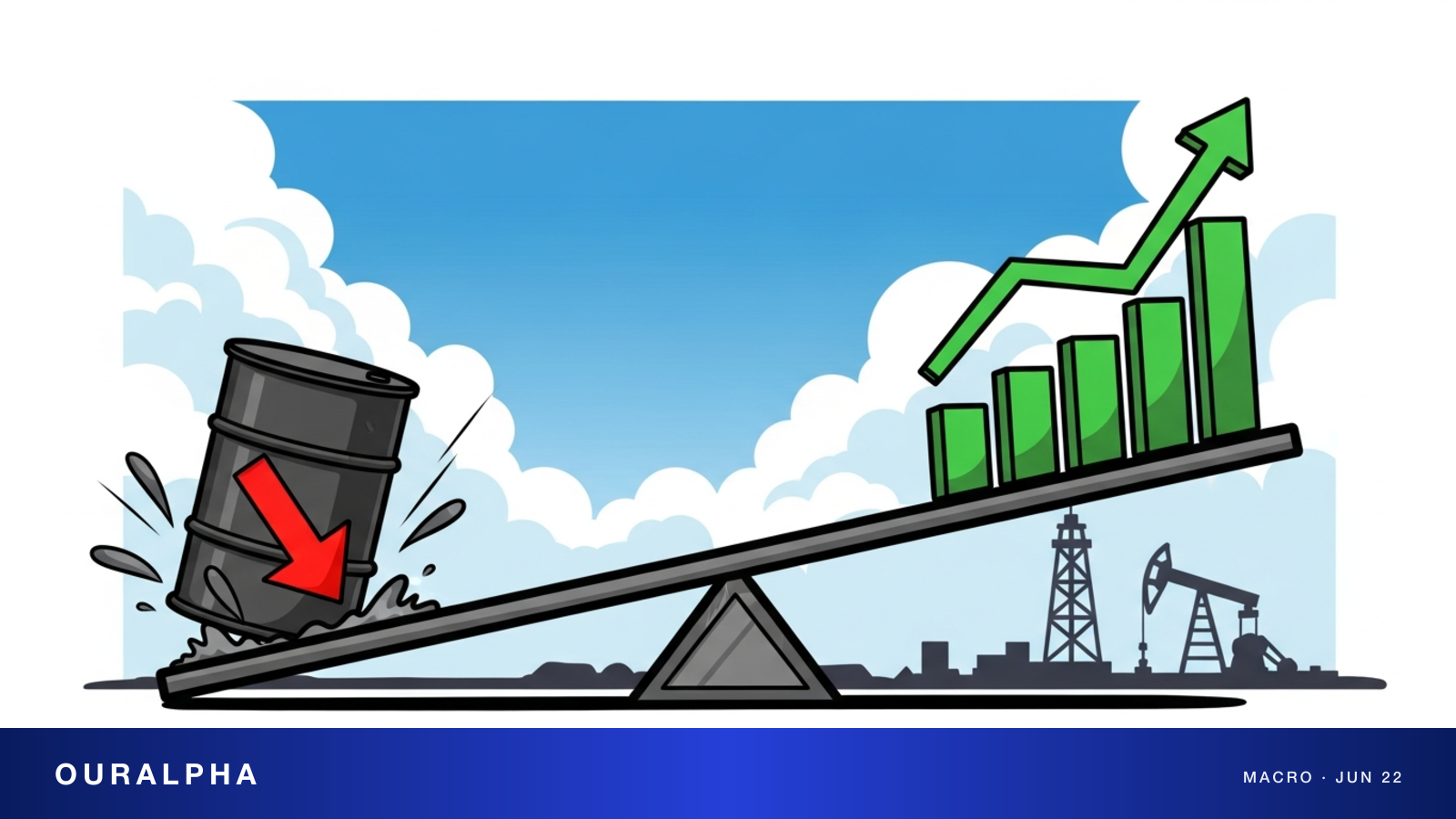
A mid-June US-Iran agreement ended more than 100 days of conflict, sending crude prices sharply lower. At the same time, the 10-year Treasury yield climbed to ~4.5% and markets are increasingly pricing in a Fed rate hike before year-end.
- Deal: The US and Iran signed a 14-point MOU reopening the Strait of Hormuz toll-free and launching a 60-day negotiating window; formally signed in Geneva on June 19
- Brent crude: broke below $80, settling at ~$78.96 — its first close under that level since March
- WTI crude: settled at ~$76.05
- Treasuries: the 10-year yield rose to ~4.5% on Monday, a roughly two-week high
- Fed pricing: markets assign ~50% odds to a 25 bp hike at the September meeting
A mid-June US-Iran agreement ended more than 100 days of conflict, sending crude prices sharply lower. Meanwhile, the 10-year Treasury yield climbed to ~4.5% and markets are increasingly pricing in a Fed rate hike before year-end — two macro crosscurrents shaping the backdrop for US equities.
What the Deal Says
According to Axios and CNBC, the two sides reached a 14-point memorandum of understanding (MOU) with the following core terms:
- Ends the conflict that has run for more than 100 days since February
- Reopens the Strait of Hormuz with no transit fees
- Lifts the US naval blockade
- Opens a 60-day negotiating window covering Iran's nuclear program and sanctions relief
The MOU was reportedly signed digitally by President Trump and Iranian counterparts, with a formal signing ceremony planned for Geneva on June 19.[Axios]
Oil Sells Off
The Strait of Hormuz is one of the world's most critical crude chokepoints. Markets read the deal as a meaningful easing of supply constraints, and oil fell hard. Per CNBC:
- Brent dropped 3.6% to $84.21 on the initial June 15 reports, then fell a further 5% to settle at ~$78.96 — its first close below $80 since March
- WTI slid more than 4% intraday to $81.38 before settling at ~$76.05
[CNBC] CNBC had previously reported that oil was already down roughly 20% from its 2026 peak as ceasefire optimism built.[CNBC]
Treasury Yields and Rate-Hike Odds
Even as oil fell, Treasuries sold off. The 10-year yield rose to ~4.5% on Monday, its highest level in roughly two weeks, according to Trading Economics.[Trading Economics]
On the policy path, markets are now pricing at least one 25 bp hike this year, with ~50% odds on September specifically. Nine of the 19 Fed policymakers penciled in at least one hike for 2026. Deutsche Bank and BofA Global Research have both shifted their forecasts to include a September move.[Trading Economics]
That repricing tracks the Fed's recent posture: last week's tone leaned hawkish and the central bank revised its inflation forecasts higher. Worth noting — these are market pricing and institutional forecasts, not announced Fed decisions.
What It Means for Stocks
Cheaper oil is generally disinflationary, but rising yields and a more hawkish rate path point to tighter financial conditions. On June 22, broad US equities pulled back: the S&P 500 fell ~0.37% to 7,472.79 and the Nasdaq Composite dropped ~1.32% to 26,166.60.[CNBC]
The key threads to watch from here: how the US-Iran talks progress, whether oil can hold these lower levels, and what the Fed actually does in September.
Sources
This content is for informational purposes only and does not constitute investment advice, trading advice, or any guarantee of returns.