Amazon Opens LTL Freight to All Comers — Transport Stocks Take a Hit

Amazon (AMZN) has thrown its less-than-truckload freight network open to any business shipping anywhere in the U.S., sending shares of XPO, Old Dominion, FedEx Freight, and peers sharply lower on Wednesday. Some analysts say the selloff is overdone — for now.

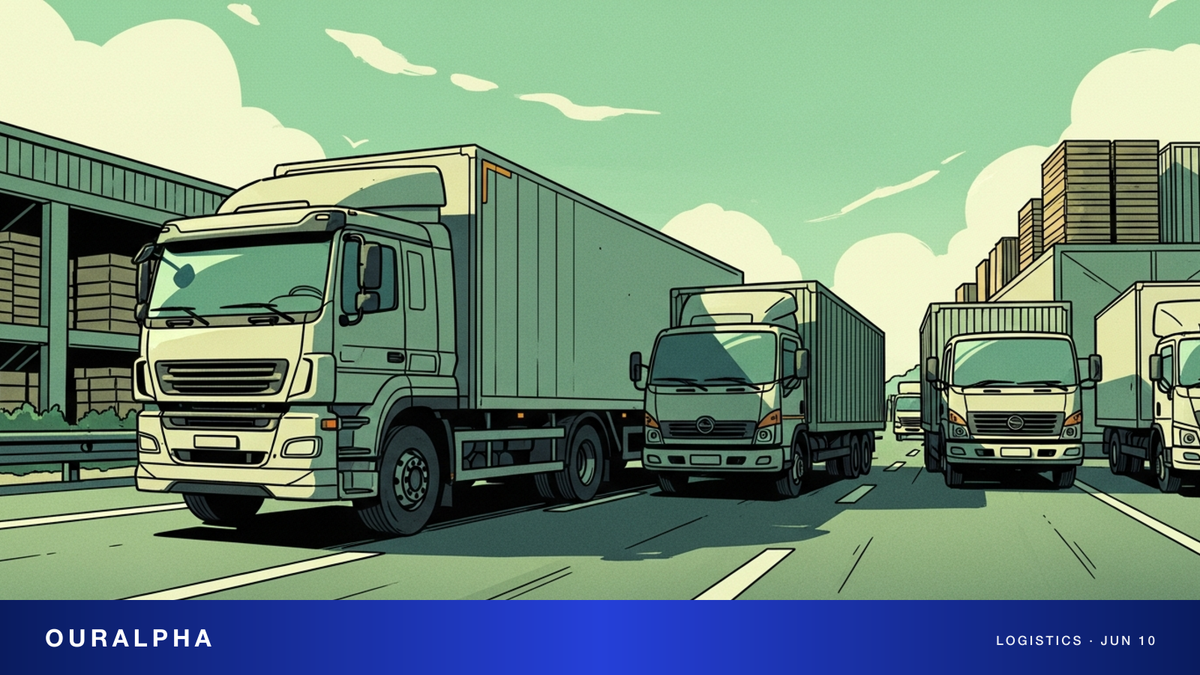
A convoy of freight trucks on a U.S. highway — Amazon enters the LTL market, OurAlpha US stock news
Amazon has once again leveraged its internal logistics scale to challenge an incumbent industry — and transport stocks are repricing the threat.

Bottom line: Amazon (AMZN) has opened its less-than-truckload (LTL) freight service to all businesses — not just those shipping into its own warehouses — sparking a broad selloff in transport stocks Wednesday as the market reassesses competitive pressure on legacy carriers.

  • Amazon expanded its LTL offering beyond its own fulfillment network, now accepting shipments from any business to any destination within the U.S.
  • Transport stocks sold off hard: XPO down ~5%, J.B. Hunt down ~3%, LTL incumbent Old Dominion down ~5%, ArcBest down ~4%, and the newly spun-off FedEx Freight down ~7%.
  • The service covers 1–6 pallets, ranging from roughly 150 to 15,000 lbs (~68 kg to ~6,800 kg).
  • The network behind it: ~80,000 trailers and ~24,000 intermodal containers.
  • Some analysts argue the market overreacted — no fundamental shock to incumbents in the near term.

The U.S. transportation sector sold off broadly on Wednesday, June 10, after Amazon (AMZN) announced it was opening its LTL freight service — which consolidates multiple shippers' cargo onto a single trailer — to all businesses, with delivery to any U.S. destination. Previously, the service was restricted to customers shipping into Amazon's own warehouses and fulfillment centers, according to CNBC[CNBC].

How Transport Stocks Reacted

Freight and trucking names fell across the board following the announcement, per CNBC and Yahoo Finance:

  • XPO fell ~5%;
  • J.B. Hunt fell ~3%;
  • LTL stalwart Old Dominion Freight Line fell ~5%, and ArcBest fell ~4%;
  • FedEx Freight — which only recently completed its spinoff from FedEx earlier this month — fell ~7%[Yahoo Finance].

What the Service Actually Covers

The offering is part of Amazon's broader Amazon Supply Chain Services initiative, according to CNBC.

  • Shippers can book 1–6 pallets, with cargo weights ranging from roughly 150 to 15,000 lbs (~68 kg to ~6,800 kg);
  • The network is backed by approximately 80,000 trailers and 24,000 intermodal containers[CNBC].

In short, Amazon is monetizing the logistics infrastructure it built for its own e-commerce operations by turning it into a third-party freight service.

Real Threat or Market Overreaction?

Opinion is divided on how much this actually changes the competitive landscape.

According to Invezz, some analysts think investors got ahead of themselves: established LTL carriers still hold meaningful advantages built over decades — dense terminal networks, door-to-door pickup and delivery capabilities, and deep operational expertise — and Amazon doesn't pose a fundamental near-term threat to their business models[Invezz].

That said, those same analysts acknowledge that a more substantive competitive challenge from Amazon is building over time. This isn't the first time Amazon has turned internal platform capabilities into a business that disrupts a traditional industry — and transport stocks are now pricing in that longer-term risk. The timing and magnitude of the threat remain contested, with no clear consensus across the Street.

What to Watch

Key things to track going forward: Amazon's pricing and capacity rollout for the new service; volume and yield trends at incumbent LTL carriers; and whether third-party adoption of Amazon's freight network accelerates.

This content is for informational purposes only and does not constitute investment advice, trading advice, or any guarantee of returns.

Keep Reading

Alphabet’s Antitrust Headache Deepens: Sweden Orders $1.5B Payout to Klarna, South Korea Opens New Probe

Alphabet’s Antitrust Headache Deepens: Sweden Orders $1.5B Payout to Klarna, South Korea Opens New Probe

Alphabet edged higher in early trading Tuesday, but antitrust pressure is building. A Swedish court ordered Google to pay Klarna $1.5 billion in damages, while South Korea’s antitrust watchdog launched a fresh probe.

  • Price action: As of 9:30 a.m. ET on July 1, Alphabet (GOOGL) was at $357.98, up 0.17% (+$0.61) from Friday’s close of $357.37. Opened at $358.38, with an intraday range of $357.89–$358.39.
  • Swedish verdict: The Stockholm District Court ruled
Read full story →

Stay ahead of the market — never miss a deep dive

Follow OurAlpha for AI-driven US equity research and market insight, every day.