Fox's $22B Roku Deal: Why the Acquirer's Stock Tanked 17%

Fox Corporation agreed to buy Roku for roughly $22 billion in cash and stock, a deal that sent Fox's own shares plunging ~17% on dilution and debt concerns — while Roku barely budged.

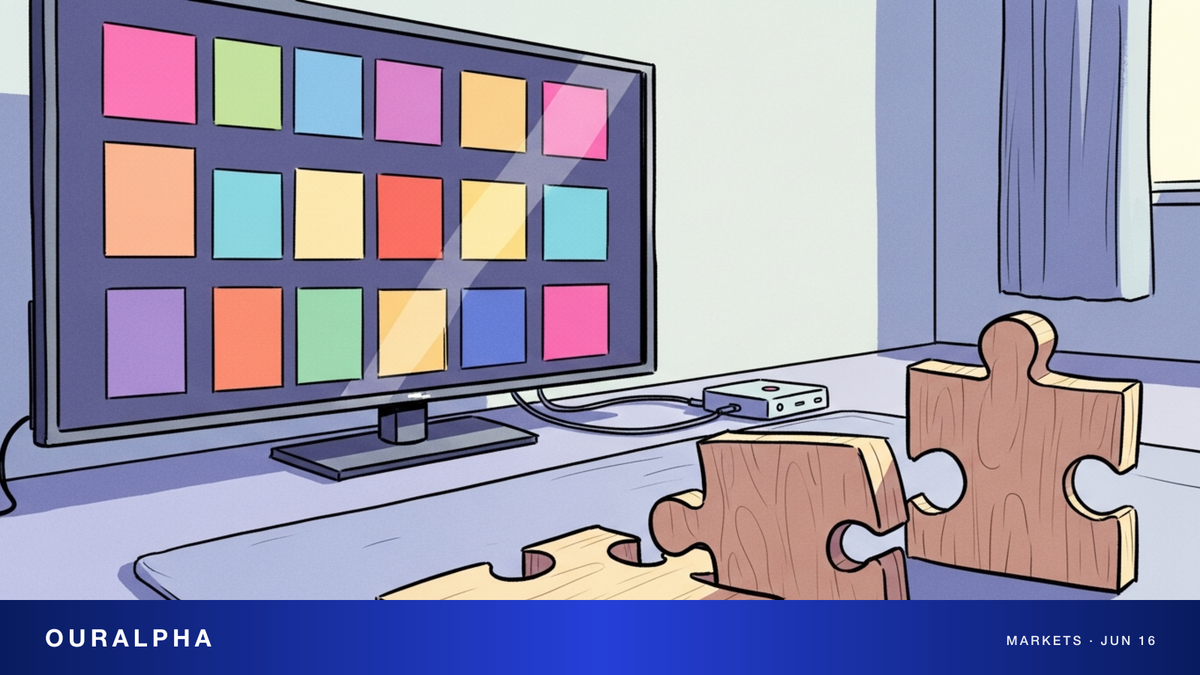
Streaming TV and puzzle-piece merger graphic illustrating Fox's $22 billion acquisition of Roku
The target barely moved; the acquirer cratered — the market's math landed squarely on dilution and debt.

Bottom line: Fox Corporation (FOXA) announced it will acquire streaming platform Roku (ROKU) at an enterprise value of roughly $22 billion in a cash-and-stock deal. When the news dropped, Roku shares barely moved while Fox stock plunged approximately 17% — with markets zeroing in on dilution and the new debt load.

  • Fox is paying $160 per Roku share: $96 in cash and $64 in Fox Class A common stock.
  • The deal values Roku at roughly $22 billion enterprise value, an ~11% premium to Roku's prior closing price.
  • On the announcement day, Roku (ROKU) fell ~1.62%; Fox (FOXA) fell ~16.8%.
  • Fox reportedly plans to fund ~40% of the deal with stock and is taking on roughly $8.3 billion in new debt.
  • Both boards approved the deal unanimously; it is expected to close in the first half of 2027.

Another blockbuster deal is reshaping the media and streaming landscape. Fox Corporation (FOXA) announced it has entered a definitive agreement to acquire streaming platform Roku (ROKU) at an enterprise value of roughly $22 billion in a cash-and-stock transaction. What caught markets off guard: the target's stock barely moved, while the acquirer's shares sold off sharply[Fox Corporation].

Deal Terms

The deal's structure and price tag are the starting point for understanding the market reaction. Per Fox Business and the company's official announcement, the key terms are:

  • Fox is paying $160 per Roku share — $96 in cash and $64 in Fox Class A common stock;
  • That values Roku at an enterprise value of roughly $22 billion, an ~11% premium to Roku's closing price the prior Friday;
  • The combined company would bring together Fox's sports, news, and entertainment content alongside its Tubi service, and Roku's connected TV (CTV) platform, The Roku Channel, first-party data, and direct reach into more than 100 million streaming households worldwide;
  • By viewership share, the combined entity would become the third-largest player in the U.S. television market, spanning broadcast, cable, local, and streaming[Fox Business].

On the financial side, Fox projects the deal will be accretive to free cash flow per share in the second full fiscal year post-close, with roughly $400 million in annualized cost synergies and additional revenue upside. Both boards approved unanimously; closing is targeted for the first half of 2027[PR Newswire].

Stock Reaction: Target Slips, Acquirer Craters

Typically in M&A, the target rallies on the premium while the acquirer dips on deal costs. Here, both stocks fell — by very different magnitudes. On the day of the announcement, Roku (ROKU) dropped ~1.62% while Fox (FOXA) fell ~16.8%[Yahoo Finance].

Roku's modest decline has a straightforward read: the ~11% premium struck some investors as underwhelming relative to their expectations for the stock's standalone value[Yahoo Finance].

Why Fox Fell Harder

The selloff in Fox centered on two concerns: financing structure and business mix. Fox reportedly plans to fund ~40% of the deal in stock and is adding roughly $8.3 billion in new debt — a combination that signals meaningful dilution to existing shareholders and a real hit to balance sheet flexibility[Yahoo Finance].

There's also a business-mix concern: absorbing Roku brings significant exposure to the lower-margin OEM (hardware device) segment, which operates on different economics than Fox's existing businesses[The Motley Fool]. Together, these factors explain the bulk of Fox's single-day selloff.

Context Worth Keeping

Reading the day-one stock move as a final verdict on the deal requires some caution. First, the initial market reaction to M&A announcements typically prices in dilution and integration risk immediately — it says little about whether synergies will materialize over years. Fox's own accretion and synergy targets don't kick in until the second full fiscal year post-close. Second, the deal still has to clear regulatory review; with a targeted close in H1 2027, meaningful uncertainty remains. Third, whether ~11% is a "thin" premium depends entirely on where you think Roku's standalone value sits — and the market is divided. This article summarizes publicly available company announcements and media reports, and does not constitute a view or recommendation on Fox (FOXA), Roku (ROKU), or any other asset.

This content is for informational purposes only and does not constitute investment advice, trading advice, or any guarantee of returns.

Keep Reading

Alphabet’s Antitrust Headache Deepens: Sweden Orders $1.5B Payout to Klarna, South Korea Opens New Probe

Alphabet’s Antitrust Headache Deepens: Sweden Orders $1.5B Payout to Klarna, South Korea Opens New Probe

Alphabet edged higher in early trading Tuesday, but antitrust pressure is building. A Swedish court ordered Google to pay Klarna $1.5 billion in damages, while South Korea’s antitrust watchdog launched a fresh probe.

  • Price action: As of 9:30 a.m. ET on July 1, Alphabet (GOOGL) was at $357.98, up 0.17% (+$0.61) from Friday’s close of $357.37. Opened at $358.38, with an intraday range of $357.89–$358.39.
  • Swedish verdict: The Stockholm District Court ruled
Read full story →

Stay ahead of the market — never miss a deep dive

Follow OurAlpha for AI-driven US equity research and market insight, every day.