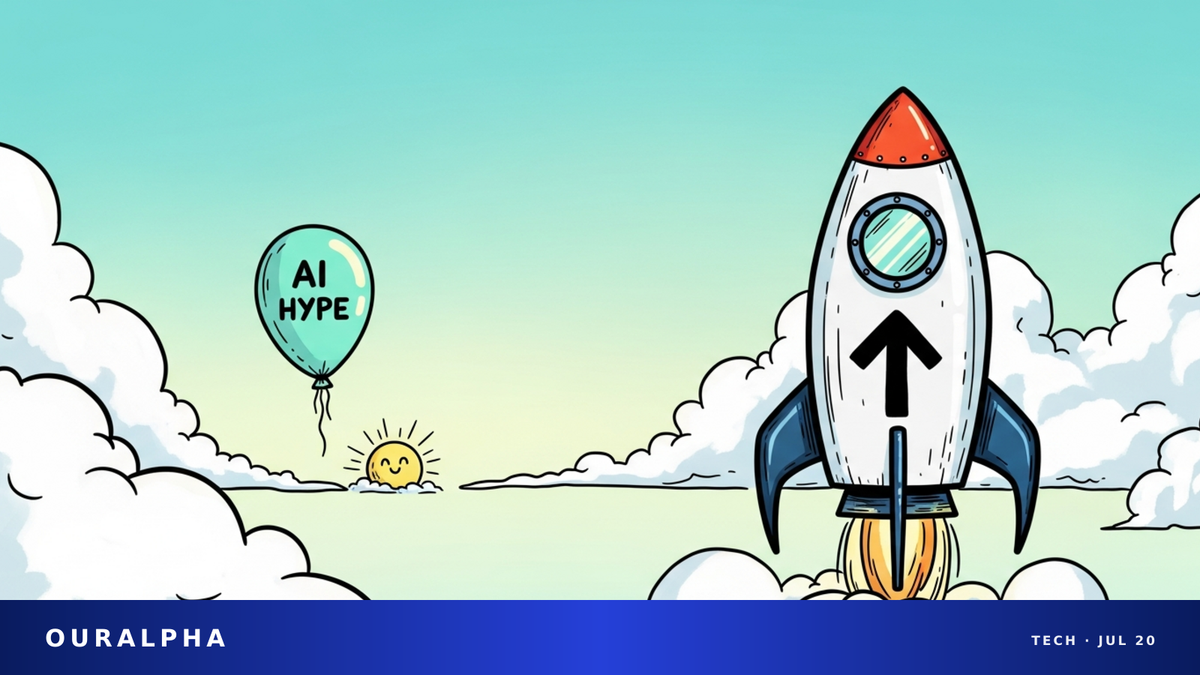
Google’s Gemini Delay Deepens AI Bubble Jitters, Stock Sinks 2% on Friday

Alphabet shares slid 2.17% Friday after reports that its flagship Gemini AI model is falling behind schedule, adding fuel to a growing market debate over whether Big Tech’s massive capex binge is building real capacity or just paying more for the same.

Google Gemini delay, AI bubble fears, Alphabet stock decline
Google’s Gemini delay stokes concerns over AI competitiveness and capital spending efficiency.

Alphabet (GOOGL) shares slid Friday after reports that its flagship Gemini AI model is falling behind schedule, as the market’s anxiety over a potential AI capex bubble intensifies. This week, a wave of Big Tech earnings — including Alphabet and Tesla — will put the AI investment thesis to the test.

  • Stock drop: Alphabet (GOOGL) closed Friday at $346.77, down 2.17% (-$7.69) from the prior close of $354.46, after touching an intraday low of $341.36.[Investopedia]
  • Gemini delay: Investopedia reported that the sell-off was triggered by news that Alphabet’s flagship AI model, Gemini, is behind schedule.[Investopedia]
  • AI sector under pressure: Tech stocks broadly weakened last week. The iShares Semiconductor ETF (SOXX) fell more than 10% for the week, while the VanEck Semiconductor ETF (SMH) dropped nearly 9%.[CNBC]
  • Earnings season focus: This week, 77 S&P 500 companies — including Alphabet and Tesla — report earnings. The market will be laser-focused on their AI capital spending plans.[CNBC]
  • Capex inflation: Morgan Stanley estimates the cost of building 1 GW of AI capacity has risen about 20%. Analysts warn that roughly 20%-30% of the growth in AI capex may be due to inflation, not real expansion.[Bundle]
  • Broader market: The Dow fell 0.2% last week, the S&P 500 dropped 0.5%, and the Nasdaq Composite lost 1.5%.[Investopedia]

As of 8:30 a.m. Beijing time on July 20, 2026 (8:30 p.m. ET on July 19), U.S. markets were closed for the weekend. Alphabet (GOOGL) last traded at Friday’s close of $346.77, down 2.17% (-$7.69) from the prior session’s $354.46. The stock opened at $346, hit a high of $348.52, and bottomed at $341.36. Friday’s sell-off was driven by news that Google’s flagship Gemini AI model is behind schedule, alongside mounting fears of an AI capex bubble that weighed on the entire tech sector.

Gemini Delay: A Red Flag in the AI Race

According to Investopedia, the immediate catalyst for Alphabet’s Friday decline was that “its flagship AI model, Gemini, is falling behind schedule.”[Investopedia] The news amplified investor concerns about Google’s competitiveness in the AI race. With rivals like OpenAI and Microsoft iterating rapidly, any product delay risks being read as a sign of technical or execution problems.

This wasn’t an isolated event. Tech stocks broadly sold off last week, with the semiconductor sector hit especially hard. CNBC reported that the iShares Semiconductor ETF (SOXX) fell more than 10% for the week, while the VanEck Semiconductor ETF (SMH) dropped nearly 9%.[CNBC] Chip stocks including Nvidia (NVDA), Broadcom (AVGO), Intel (INTC), and Micron (MU) all declined in premarket futures trading on July 17.[Investopedia]

The AI Capex Inflation Spiral: Spending More, Building Less

Market anxiety over AI isn’t just about product delays — it’s increasingly about the efficiency of the massive capital spending. According to an analysis by Business Insider, republished via Bundle, Google, Amazon, Microsoft, and Meta have collectively planned to spend over $700 billion on AI this year.[Bundle] But the real purchasing power of those dollars is shrinking.

Morgan Stanley estimates the cost of building 1 GW of AI capacity has risen about 20%. For a typical Nvidia-based system, the cost per GW has jumped from roughly $29 billion to $35 billion; for newer systems, it’s gone from $41 billion to $49 billion.[Bundle] The culprit: soaring memory chip prices, along with increasingly scarce and expensive power equipment, construction materials, skilled labor, and grid connections.

This creates a vicious cycle: Big Tech orders more AI data center gear, shortages worsen, prices rise, companies then boost their spending forecasts to cover the higher costs, which in turn drives demand and prices even higher. Brad Gastwirth, head of research at Circular Technology, estimates that 20% to 30% of the next wave of AI capex growth will reflect inflation, with only 70% to 80% representing real expansion. His warning: “Investors need to be cautious when interpreting higher capex numbers — there is definitely an inflation component in there.”[Bundle]

Cantor Fitzgerald analysts expect that this earnings season’s 2026 capex plans won’t change much, but 2027 forecasts will be revised sharply higher: $283 billion for Google, $271 billion for Amazon, and $200 billion for Meta.[Bundle]

Earnings Season Puts the AI Narrative to the Test

This week, earnings season kicks into high gear. According to CNBC, 77 S&P 500 companies — including Alphabet and Tesla — will report second-quarter results.[CNBC] Reuters notes that Alphabet and Intel’s results will be the key barometers for the “AI trade.”[Reuters]

CNBC reported that the earnings season has started strong, with 88% of the roughly 50 S&P 500 companies that have already reported beating analyst expectations.[CNBC] But the market’s scrutiny of Big Tech — especially AI-related names — now goes well beyond revenue and profit. Business Insider’s analysis points out that investors will be watching closely to see if management, when discussing capex, also mentions specific metrics like power capacity, GPU deployment, memory procurement, networking, and new data center campuses. “If capex rises in lockstep with those metrics, that points to real expansion. If not, a bigger capex number may just mean Big Tech is spending more to stay in place.”[Bundle]

Macro Headwinds and Geopolitical Risk: Oil Spikes, Mideast Tensions Add Volatility

Beyond the AI sector’s own pressures, the macro backdrop is deteriorating. CNBC reported that oil prices surged as U.S.-Iran tensions escalated. WTI crude futures rose more than 2% in premarket trading on July 17 to around $81 a barrel, the highest level in a month.[Investopedia] This has stoked fears of potential economic fallout.[Investopedia]

Meanwhile, IBM suffered its worst single-day drop in history last week after the legacy tech giant warned that customers are pulling back on software spending.[CNBC] That signal added to broader concerns about a slowdown in enterprise tech spending.

Despite the headwinds, this week’s earnings are seen as a critical inflection point. Reuters quoted analysts saying that Alphabet’s results will be a direct test of whether the massive AI investments can translate into sustainable revenue growth.[Reuters] Under the twin pressures of AI bubble fears and capex efficiency doubts, Big Tech will need to deliver real results to justify the narrative.

This content is for informational purposes only and does not constitute investment advice, trading advice, or any guarantee of returns.

Keep Reading

Boeing Wins Key Shareholder Suit as Appeals Court Tosses Class Action

Boeing Wins Key Shareholder Suit as Appeals Court Tosses Class Action

A U.S. federal appeals court has decertified the shareholder class action against Boeing (BA) tied to the January 2024 Alaska Airlines 737 MAX 9 door-plug blowout. As of the close of trading on July 20, Boeing shares were at $209.48, down 2.13% from the prior close.

  • The U.S. Court of Appeals for the Fourth Circuit ruled on July 20 to overturn the lower court's certification of the shareholder class action.[Reuters]
  • The suit alleged Boeing made false statements to investors about
Read full story →

Stay ahead of the market — never miss a deep dive

Follow OurAlpha for AI-driven US equity research and market insight, every day.