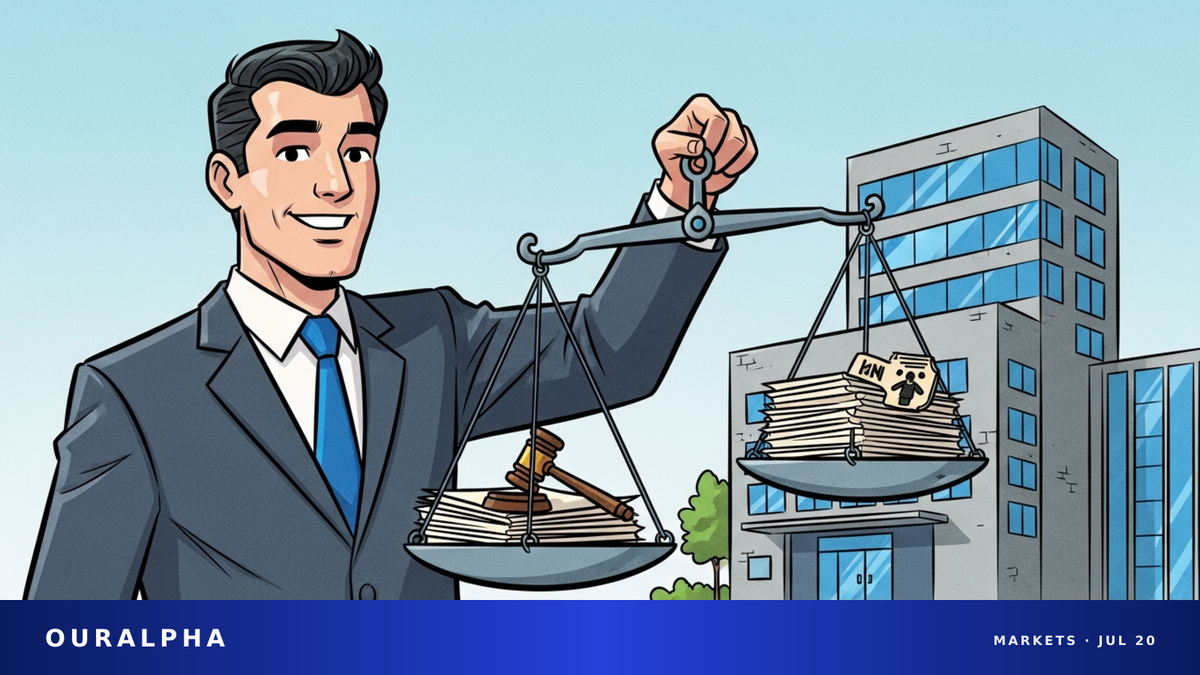
UnitedHealth CEO Blasts ‘Ineffective’ No Surprises Act Arbitration as Providers Game the System

UnitedHealth Group executives warned on the Q2 earnings call that the No Surprises Act’s independent dispute resolution process is being “exploited” by certain providers, dragging on commercial business. The company also faces a sharp drop in ACA and Medicaid enrollment and an 11% surge…

UnitedHealth No Surprises Act arbitration commercial business pressure
UnitedHealth executives sharply criticized the No Surprises Act arbitration process on the earnings call, saying it is being abused by providers and adding pressure to commercial business.

UnitedHealth Group executives issued a stark warning on the Q2 earnings call, saying the No Surprises Act’s independent dispute resolution process is “ineffective” and being “exploited” by certain healthcare providers, dragging on its commercial business. At the same time, the company is grappling with a steep drop in ACA and Medicaid enrollment and an 11% surge in employer-plan medical costs. As of the July 17, 2026 close, UnitedHealth (UNH) traded at $426.09, up 0.64% from the prior close of $423.38.

  • UnitedHealth executive Dan Kueter said on the earnings call that the independent dispute resolution process is “ineffective” and is being “exploited by certain providers in certain geographies.”[Fierce Healthcare]
  • UnitedHealthcare’s Medicaid enrollment fell by 525,000 members due to new work requirements.[Axios]
  • Executives told CNBC they expect to lose roughly 500,000 ACA plan members in 2026.[Axios]
  • Medical costs for employer-sponsored plans surged 11% year-over-year, exceeding the company’s already elevated expectations.[Axios]
  • The company blamed “aggressive” provider billing practices and abuse of the surprise billing arbitration process by some large out-of-network providers.[Axios]
  • Despite these pressures, UnitedHealth Group raised its full-year earnings guidance.[Axios]

UnitedHealth Group (UNH) beat Q2 expectations and raised its full-year guidance on July 17, but executives used the earnings call to deliver a blistering critique of the No Surprises Act’s independent dispute resolution (IDR) process, calling it “ineffective” and saying it is being “exploited” by some providers, weighing on the commercial business. At the same time, the company is under pressure from a sharp drop in government plan enrollment (ACA and Medicaid) and an 11% spike in employer-plan medical costs. As of the July 17, 2026 close, UnitedHealth shares were at $426.09, up 0.64% from the prior close of $423.38. With U.S. markets closed for the weekend, the stock remains at that level with no intraday change.

No Surprises Act Arbitration Under Fire

On the earnings call, Dan Kueter, CEO of UnitedHealth’s employer and individual business, did not mince words about the No Surprises Act’s IDR process. According to Fierce Healthcare, Kueter said the “ineffective” process “is being exploited by certain providers in certain geographies.”[Fierce Healthcare] The law was designed to protect patients from surprise medical bills, but insurers have long complained that its arbitration mechanism is being abused, driving up costs. Kueter’s comments are the latest in a growing chorus of industry criticism of the IDR process, which he cited as a factor dragging on the company’s commercial business performance.

Government Plan Enrollment Plunges

UnitedHealth is feeling the direct impact of U.S. health policy changes. According to Axios, new Medicaid work requirements from last year’s Republican tax and spending bill have led to a 525,000-member drop in UnitedHealthcare’s Medicaid enrollment.[Axios] Additionally, executives told CNBC they expect to lose roughly 500,000 ACA plan members in 2026.[Axios] These shifts directly reflect Congress’s failure to extend enhanced ACA subsidies and the implementation of Medicaid cuts and first-ever work requirements, pushing millions of Americans out of marketplace insurance plans.

Employer-Plan Medical Costs Surge 11%

Beyond government business, UnitedHealth’s commercial segment is also under pressure. The company reported that medical costs for employer-sponsored plans remain “stubbornly high,” surging 11% year-over-year and even exceeding the company’s already elevated expectations.[Axios] UnitedHealth attributed the cost spike to several factors: “aggressive” provider billing practices, abuse of the surprise billing arbitration process by some large out-of-network providers, and rapidly rising pharmacy costs, particularly for expensive specialty drugs and GLP-1 medications used to treat obesity and diabetes.[Axios]

Industry Ripple Effects and What to Watch

UnitedHealth’s struggles are not isolated. According to Axios, another major insurer, Elevance Health, reported a 469,000-member decline, driven largely by ACA and Medicaid losses, and said it is exiting the Washington, D.C., Medicaid program and considering further exits from other markets over the next 18 months.[Axios] Large hospital chain HCA also took a $400 million hit from patients leaving ACA exchanges, and the company said ACA market changes will cost it $1 billion to $1.2 billion this year.[Axios] Axios notes that any rise in the uninsured rate will put more pressure on the healthcare system while squeezing margins for both providers and payers. The market is watching how providers and insurers will shift more costs to commercial insurance patients to offset losses from government programs.[Axios]

This content is for informational purposes only and does not constitute investment advice, trading advice, or any guarantee of returns.

Keep Reading

Musk Douses $52B SpaceX AI Server Rumor, Dell and SMCI Shares Reverse Gains

Musk Douses $52B SpaceX AI Server Rumor, Dell and SMCI Shares Reverse Gains

Elon Musk over the weekend called a report that SpaceX had inked a $52 billion AI server deal with Foxconn “fake news,” briefly lifting shares of Dell Technologies (DELL) and Super Micro Computer (SMCI) before they reversed course in Monday trading.

  • As of 10:00 a.m. ET Monday, Dell (DELL) traded at $24.07, down 0.45% from Friday’s close of $24.18.
  • Super Micro (SMCI) was at $24.07, also down 0.45% from $24.18.
  • Musk responded to a post summarizing
Read full story →

Stay ahead of the market — never miss a deep dive

Follow OurAlpha for AI-driven US equity research and market insight, every day.