U.S. Stock Futures Climb as Iran Diplomacy Signals Ease Middle East Risk Premium

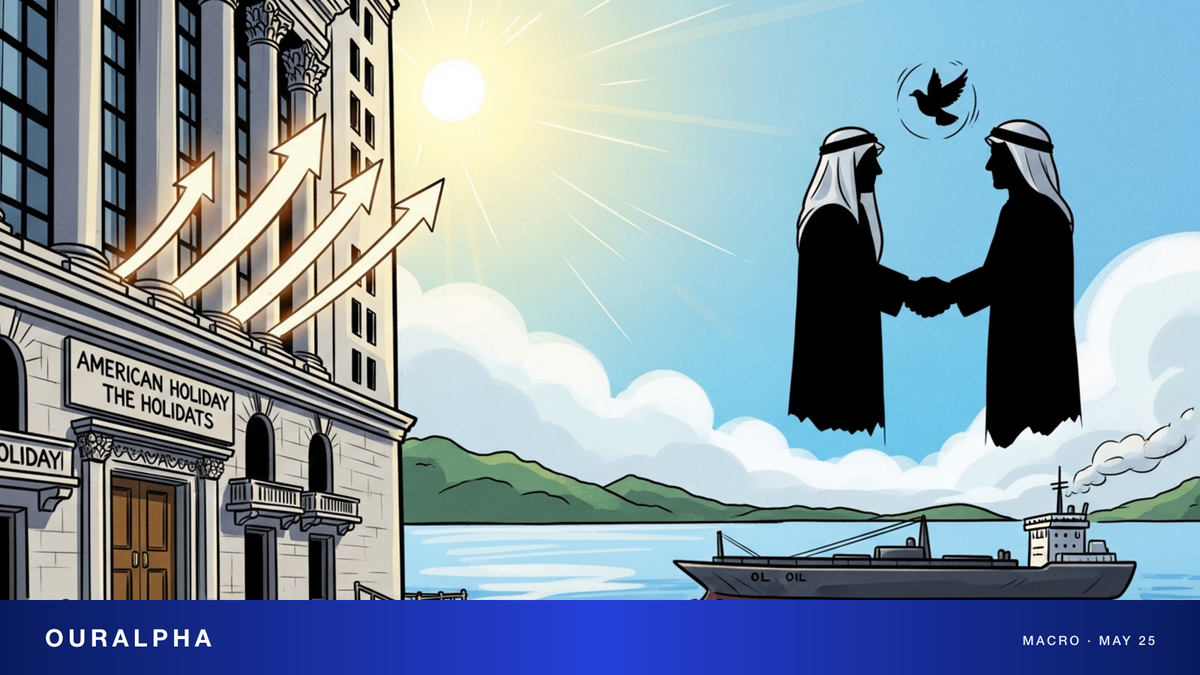
U.S. equity futures rallied across the board on Memorial Day as weekend reports of a U.S.-Iran diplomatic framework sent WTI crude tumbling more than 4% — unwinding two weeks of built-up Middle East risk premium in a single holiday session.

U.S. Stock Futures Rise as Iran Deal Hopes Ease Oil Shock Fears

TL;DR

With U.S. cash markets closed for Memorial Day, all three major index futures — Dow, S&P 500, and Nasdaq 100 — moved higher. WTI crude dropped 4%. The market isn't pricing a signed deal; it's pricing a meaningful drop in the probability of a worst-case Middle East scenario.

  • S&P futures up ~0.5%, Dow futures leading; energy-sensitive consumer stocks and airlines ticked higher in pre-market
  • WTI fell from Friday's ~$96 to near $92; Brent dropped in tandem
  • Trigger: weekend reports that Washington and Tehran are exploring a diplomatic framework to prevent a Strait of Hormuz disruption
  • This is a signal to trim hedges, not rotate — weekend-headline-driven Middle East risk-on moves have historically given back half their gains within 48 hours if the politics don't follow through

U.S. cash markets were closed for Memorial Day, but all three major index futures — Dow, S&P 500, and Nasdaq 100 — rallied in the holiday session. Barron's reported that markets are betting a diplomatic opening between Washington and Tehran could keep the Strait of Hormuz shipping lane intact and take the worst-case scenario off the table — one that has weighed on risk appetite for the past two weeks.

At the same time, WTI crude fell more than 4% on the day and Brent dropped nearly 5%. Those two price moves arriving together unwound the Middle East risk premium that had been building for a fortnight — all in a single low-liquidity holiday session.

How Much Did Futures Move?

S&P 500 futures rose roughly 0.5%, with Dow futures leading the advance. Energy-sensitive consumer names and airline stocks also firmed in pre-market trading. WTI June futures slid from above $96 on Friday to near $92, off about 4%; Brent fell in tandem to the high-$90 range.

The trigger wasn't a single confirmed headline but a cluster of weekend media reports that Washington and Tehran are exploring a diplomatic framework to avoid a Strait of Hormuz disruption. Markets aren't pricing a done deal — they're pricing a lower probability of the worst-case outcome. In thin holiday liquidity, that was enough to push futures meaningfully higher.

Why Did Markets React So Sharply?

For the past two weeks, a single macro theme has dominated U.S. equities:

  • Oil pushing toward $100
  • Energy stocks leading
  • Airlines and transports under sustained pressure
  • Rate-sensitive growth stocks getting hit from both sides — oil and rates simultaneously

If geopolitical risk starts fading, that entire playbook reverses: energy gives back its relative strength; airlines and consumer names get bought again; the double headwind on high-multiple tech eases.

A move lower in crude also strips out the most visible component of any near-term inflation pulse, giving bond markets room to price a slightly more dovish Fed path — a tailwind for duration-sensitive growth names like NVDA, MSFT, AMD, and the broader AI infrastructure complex.

This Is a Signal to Trim Hedges, Not Rotate

For any portfolio that spent the past two weeks adding energy hedges and underweighting airlines and consumer names, Tuesday's open is the first real test: do you unwind those hedges?

The honest answer is to check two things before acting:

  • Can WTI hold below $95 through Tuesday and Wednesday, with implied volatility continuing to ease?
  • Does the Iran story hold up under scrutiny once Washington is back at work?

A diplomatic framework is not a signed agreement. Historically, Middle East risk-on moves driven by weekend headlines have given back roughly half their gains within 48 hours when the political follow-through fails to materialize.

Monday's futures move pointed in the right direction — but it isn't yet grounds for a full rotation. It's grounds for trimming hedges, not flipping the book. That distinction matters for position management.

Three Things to Watch

1. Can WTI hold below $95 through Tuesday and Wednesday, with options implied vol continuing to compress? If it does, the energy risk premium is genuinely coming out.

2. The relative performance of fuel-sensitive sectors vs. the energy ETF (XLE) — airlines (DAL, UAL, AAL), transports (FDX, UPS), and fuel-sensitive consumer names (WMT, COST, TGT). This is the cleanest read on whether money is actually rotating or just chasing headlines.

3. The bond market's response: a combination of lower 10-year Treasury yields and softer oil is the cleanest setup for AI names to reclaim leadership heading into Friday's PCE print.

If all three align, Monday's holiday-session rally will look, in hindsight, like the starting gun on a broader macro regime shift. If they don't, Tuesday's open is a fade.

This content is for informational purposes only and does not constitute investment advice, trading advice, or any guarantee of returns.

Keep Reading

Alphabet’s Antitrust Headache Deepens: Sweden Orders $1.5B Payout to Klarna, South Korea Opens New Probe

Alphabet’s Antitrust Headache Deepens: Sweden Orders $1.5B Payout to Klarna, South Korea Opens New Probe

Alphabet edged higher in early trading Tuesday, but antitrust pressure is building. A Swedish court ordered Google to pay Klarna $1.5 billion in damages, while South Korea’s antitrust watchdog launched a fresh probe.

  • Price action: As of 9:30 a.m. ET on July 1, Alphabet (GOOGL) was at $357.98, up 0.17% (+$0.61) from Friday’s close of $357.37. Opened at $358.38, with an intraday range of $357.89–$358.39.
  • Swedish verdict: The Stockholm District Court ruled
Read full story →

Stay ahead of the market — never miss a deep dive

Follow OurAlpha for AI-driven US equity research and market insight, every day.