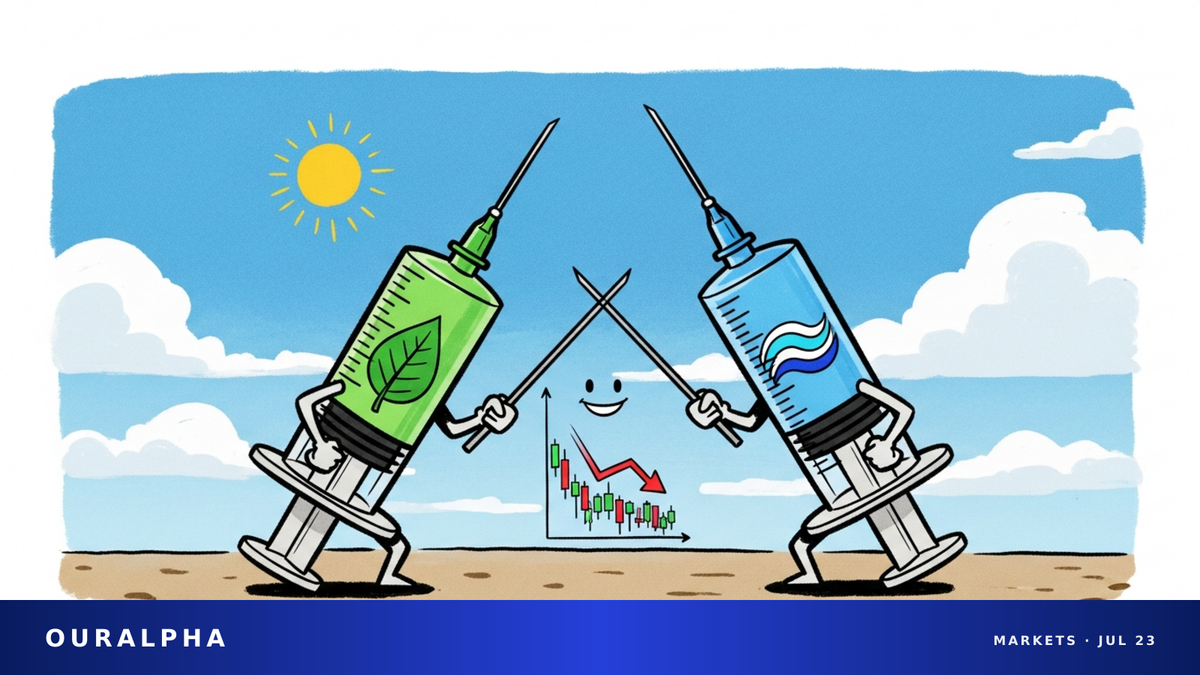
Novo Nordisk Sues Eli Lilly Over ‘Misleading’ Weight-Loss Ads; LLY Slips 1% After Hours
Novo Nordisk has taken its rivalry with Eli Lilly to federal court, accusing the drugmaker of using outdated clinical data in ads for Zepbound and Mounjaro to unfairly trash Wegovy and Ozempic. Lilly fired back, calling its ads truthful and science-based.
The two titans of the global weight-loss drug market — Novo Nordisk and Eli Lilly — are escalating their battle from market share to the courtroom. On July 21, Novo Nordisk filed a federal lawsuit in the U.S., accusing Lilly of running national ads for its blockbuster weight-loss drug Zepbound and diabetes drug Mounjaro that use “outdated” clinical trial data to mislead consumers through unfair comparisons, disparaging the efficacy of Novo’s own Wegovy and Ozempic. Lilly has forcefully denied the claims, saying its ads are based on “the most direct scientific evidence.” As of after-hours trading on July 22, Eli Lilly (LLY) shares were at $1,163.01, down 1.05% from the prior close.
- Core of the lawsuit: Novo Nordisk alleges Lilly’s ads compare the highest approved dose of Lilly’s drugs to lower doses of Novo’s drugs, deliberately ignoring Novo’s own higher-dose versions that are already approved.
- Specific example: A Zepbound ad cites the SURMOUNT-5 trial, claiming patients lost an average of 50 pounds versus just 33 pounds on Wegovy. Novo points out that trial did not use Wegovy’s newly approved 7.2 mg maximum dose.
- Legal demands: Novo is seeking a permanent injunction requiring Lilly to pull all related ads and run corrective advertising. If Lilly doesn’t voluntarily comply, Novo says it will seek a temporary restraining order.
- Market backdrop: The global weight-loss drug market is projected to reach $120 billion annually by 2030. Lilly’s Zepbound has overtaken Novo in sales.
- Stock reaction: As of after-hours trading on July 22, Eli Lilly (LLY) was at $1,163.01, down 1.05% from its prior close of $1,175.41. Novo Nordisk shares in Copenhagen fell as much as 2% during the day.
The rivalry between the two giants of the global weight-loss drug market — Novo Nordisk and Eli Lilly — has escalated from a fight for market share to a courtroom showdown. On July 21, Novo Nordisk formally filed a lawsuit in the U.S. District Court for the District of New Jersey, accusing Lilly of running national ads for its blockbuster weight-loss drug Zepbound and diabetes drug Mounjaro that use “outdated” clinical trial data to mislead consumers through unfair comparisons, violating federal and state laws on false advertising and unfair competition.[CNBC] As of after-hours trading on July 22, Eli Lilly (LLY) shares were at $1,163.01, down 1.05% from the prior close of $1,175.41.[NBC New York]
The Core of the Lawsuit: ‘Outdated’ Efficacy Comparisons
In its complaint, Novo Nordisk alleges that Lilly’s ads “deliberately cherry-pick outdated studies,” comparing the highest approved dose of Lilly’s drugs to lower doses of Novo’s drugs to “deceptively present those results as evidence of broad product-level superiority.”[The Guardian] Specifically, Novo points to a Zepbound ad that cites the SURMOUNT-5 head-to-head clinical trial, which showed patients on Zepbound lost an average of about 50 pounds, while those on Wegovy lost about 33 pounds.[NBC News] However, Novo claims that trial did not use Wegovy’s newest, highest dose — 7.2 mg — which the FDA approved in March 2026. Novo argues that its own clinical trials for the higher dose show Wegovy can achieve an average weight loss of about 47 pounds, nearly on par with Zepbound’s roughly 48 pounds.[NBC News]
Novo also alleges similar issues with Lilly’s Mounjaro ads, which compare its highest approved dose of 15 mg to the lowest approved dose of Novo’s Ozempic (1 mg), rather than Ozempic’s highest approved dose of 2 mg.[NBC New York] John F. Kuckelman, Novo Nordisk’s group general counsel, said in a statement: “Healthcare companies have a responsibility to ensure their public statements are accurate and current — ineffective, fine-print disclaimers cannot fix the misleading impression created by a large-scale national advertising campaign.”[NBC New York]
Lilly Responds: Firmly Defending Its Ads
Lilly swiftly pushed back, vigorously defending the truthfulness of its advertising. A Lilly spokesperson said in a statement: “The gold standard for comparing medicines is a well-designed, well-executed head-to-head clinical trial — exactly like SURMOUNT-5, which remains the only randomized head-to-head trial directly comparing tirzepatide and semaglutide for weight management.”[NBC New York] The spokesperson added: “Novo Nordisk isn’t competing on the merits of its own products. Instead, it’s asking the court to stop Lilly from communicating the results of this trial. We stand firmly behind our advertising. It is truthful, transparent, and based on the most direct scientific evidence — exactly what patients deserve. We will continue to focus on the science and vigorously defend ourselves against this lawsuit.”[NBC New York]
A Dual Game: Legal and Market Stakes
Novo Nordisk says it sent a cease-and-desist letter to Lilly after the 7.2 mg dose of Wegovy was approved in April, but Lilly did not respond, only inserting what Kuckelman called “inadequate disclaimers” into its ads.[NBC News] Novo is now seeking a permanent injunction requiring Lilly to pull the ads from all platforms and launch a corrective advertising campaign. The company also warned it will ask the court for an immediate temporary restraining order if Lilly does not voluntarily remove the ads.[NBC New York]
The lawsuit comes as competition in the global weight-loss drug market reaches a fever pitch. According to Bloomberg Intelligence, the market is projected to hit $120 billion annually by 2030.[Los Angeles Times] Although Novo Nordisk was first to market with Wegovy, Lilly’s Zepbound has since overtaken it in sales.[Los Angeles Times] Novo has been fighting to regain ground, including through partnerships with telehealth companies and the launch of a popular oral weight-loss drug.[Los Angeles Times]
Sources
- CNBC — Novo Nordisk sues Eli Lilly, alleging misleading GLP-1 advertising
- NBC New York — Novo Nordisk sues rival Eli Lilly over ‘misleading' weight-loss drug advertising
- Los Angeles Times — Weight-loss drug wars escalate as Novo Nordisk targets Eli Lilly ads in lawsuit
- NBC News — Novo Nordisk says it is suing Eli Lilly, accusing it of false advertising
- The Guardian — Ozempic maker Novo Nordisk sues US rival over ‘materially misleading’ ads
This content is for informational purposes only and does not constitute investment advice, trading advice, or any guarantee of returns.